
Environmental, social, and governance (ESG) hasn’t lost traction after exploding in popularity after the 2020 pandemic. Corporations are playing a bigger role in the issuance of ESG or “green” bonds, paving the way for opportunities in funds like the Vanguard ESG U.S. Corporate Bond ETF (VCEB).
While the green bond market is gaining more traction in the United States, it’s been a prevailing trend in Europe. That’s still the case today, proving that ESG bonds aren’t a one-and-done trend. Increased corporate involvement will help drive further growth, according to French international banking and financial services company BNP Paribas. If that trend mimics itself in the U.S., that’s positive news for domestic investors.
“Corporates are playing an increasingly active role in sustainable finance,” a BNP Paribas report said. “In 2024, nearly one in four investment-grade corporate bonds in EMEA were issued in sustainable format, reflecting a shift from compliance-driven issuance to strategic financial planning.”
The breadth of ESG is also evolving. When ESG funds — both equities and bonds — started to proliferate, the focus was primarily on reducing the world’s carbon footprint. Now, that focus is expanding into other areas, providing investors with greater ESG exposure depth. ESG bond funds help support initiatives like wind, solar, and other clean energy products. That’s not all, as corporations are using ESG bonds to fund other projects.
“We’re seeing a significant shift in how companies approach sustainable finance,” said Agnes Gourc, head of Sustainable Capital Markets, BNP Paribas. “It’s no longer just about decarbonisation—companies are using sustainable bonds to fund biodiversity projects, water management, and climate adaptation.”
With a growing ESG bond market, issuance will not likely dwindle anytime soon. Other third-party research is forecasting exponential growth for the ESG bond industry. The Business Research Company, for example, is forecasting the green bond market size to hit $532.74 million by 2025. This would mean a compound annual growth rate of 11% compared to the previous year. Looking farther out in the time horizon via the chart below, the green bond market could reach over $800 billion in the next four years.
What’s driving the demand? The Business Research Company cites a multitude of factors, including increased environmental awareness, regulatory support and incentives, more investor demand for ESG assets, corporate sustainability initiatives, and collaboration between public and private sectors.
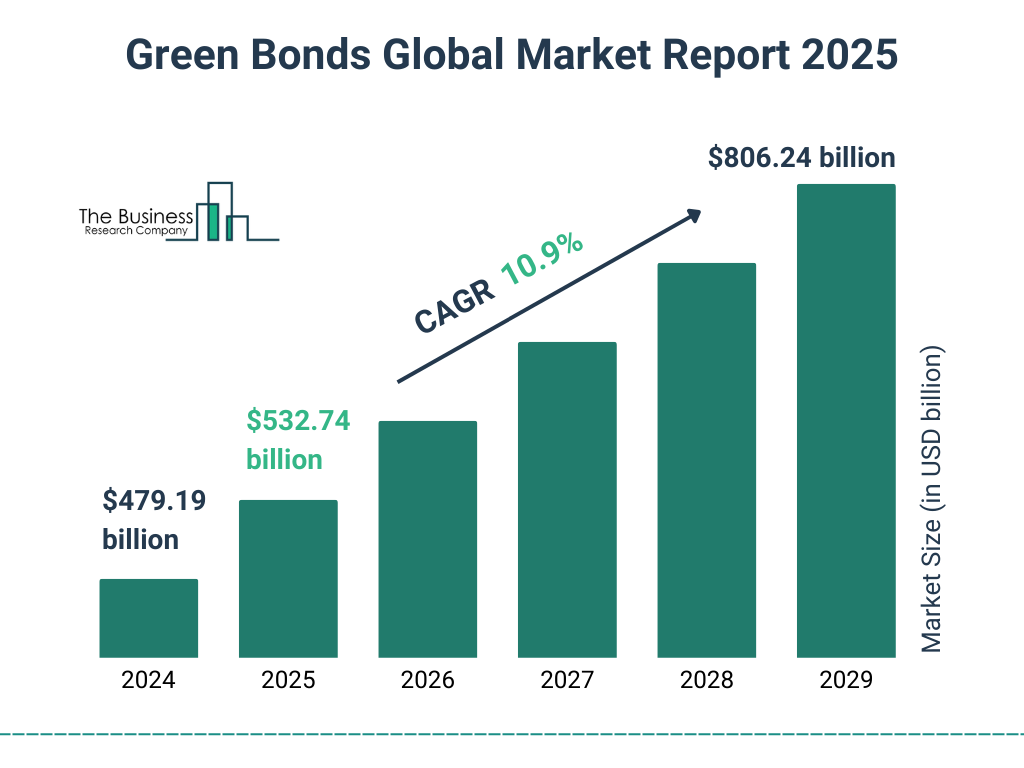
Source: The Business Research Company
A Strict ESG Filter & Yield
While ESG investors are focused on sustainability, fixed income investors with an ESG tilt may likely also seek yield. With a 30-day SEC yield of just under 5% (as of June 24), VCEB makes for an ideal option. When you add its discerning filter, investors also get quality ESG exposure.
VCEB mimics the performance of the Bloomberg MSCI U.S. Corporate SRI Select Index. Its strict filter means it excludes bond issues from companies that derive their revenue from the following sources: adult entertainment, alcohol, gambling, tobacco, nuclear weapons, controversial weapons, conventional weapons, civilian firearms, nuclear power, and thermal coal, oil, or gas.
The fund invests in investment-grade bonds, thereby minimizing credit risk. Ninety percent of the fund resides in debt rated A and BBB. Adding riskier debt in the investment-grade category allows VCEB to extrapolate more yield opportunities.
The average effective maturity of the holdings (as of May 31) is about 10 years, giving investors intermediate exposure. Deep diversification is achieved, with more than 2,800 bond holdings. The number of holdings is below the benchmark 2,926, which could speak to the discerning filter of VCEB.
Moreover, investors get this fund at a low expense ratio of 0.12%. That’s about 10 basis points below comparative category averages.
For more news, information, and analysis, visit the Fixed Income Content Hub.
