
While Nvidia’s future is tattooed on the media’s mind, the rest of the AI ecosystem is starting to shine. Look no further than Nebius and Microsoft’s $17.5 billion deal on September 8, a contract larger than Nebius’s own $15 billion market cap.
That kind of headline underscores the reality: Demand for AI infrastructure is rippling far beyond any single chipmaker, especially for companies who haven’t yet seen valuations and expectations match their current and future roles in the tech stacks of the future.
These companies defining the tech stack(s) of the future, in data centers and beyond, mentioned below, are constituents of the ROBO Global Robotics and Automation Index (ROBO) and the ROBO Global Artificial Intelligence Index (THNQ).
What Nvidia’s Earnings Told Us
For fiscal Q2 2026, which ended July 27, Nvidia reported $46.7 billion in revenue and $26.4 billion in net income. These are among the most impressive quarterly results ever posted in technology. Management reiterated that China is not receiving H20 shipments, keeping one of the world’s largest AI markets sidelined.
And while Nvidia remains the undisputed leader in AI accelerators, two caution flags stood out:
- Customer concentration is extreme. In its 10-Q, Nvidia disclosed that two customers accounted for 23% and 16% of total revenue. Four more added 14%, 11%, 11%, and 10%. In total, about 85% of revenue came from just six customers in a single quarter.
- China is a wildcard. CEO Jensen Huang has described China as a $50 billion opportunity if export restrictions ease. Yet Beijing is pushing state-linked firms to avoid constrained Nvidia chips and is accelerating domestic alternatives, from Huawei to Alibaba.
Those same hyperscalers driving Nvidia’s growth are also hedging by building their own AI silicon. Google continues to advance its Tensor Processing Units, Meta is progressing on in-house inference chips with MediaTek, and reports suggest OpenAI is preparing to launch custom silicon next year. Concentration risk is real when your biggest customers are also potential competitors.
The Build-Out Ripple Effects: Power, Cooling, & Boxes
Regardless of whose chips dominate, the infrastructure underneath is being redesigned to handle megawatt-class racks. That means power delivery, cooling, and server assembly are becoming lucrative businesses in their own right.
Take Delta Electronics, a less-covered winner. On September 9, Delta detailed its role in Nvidia’s GB200 and GB300 systems: in-rack coolant distribution units, liquid-to-air busbars, high-voltage DC systems, and grid-to-chip infrastructure. The company is already deploying +/-400 V DC at three of the four largest cloud providers. It expects its 800 V DC products to enter mass production in the second half of 2026.
This matters. High-voltage backbones can slash energy waste by up to 75%, while enabling the massive power delivery needed to keep GPU-heavy training racks and sprawling inference clusters from overheating.
It’s not just Delta. Infineon and Nvidia have formalized a collaboration on 800 V distribution, using technologies like gallium nitride (GaN) and silicon carbide (SiC). Nvidia’s technical brief listed a broad ecosystem of partners across silicon, power components, and facility-level systems, underscoring how diverse the supplier base is becoming.
On the contract manufacturing side, Foxconn is already seeing the pivot in its numbers. In Q2 2025, cloud and networking, which includes AI servers, accounted for 41% of revenue, surpassing 35% from consumer electronics (including iPhones) for the first time. That milestone shows how fast AI infrastructure has overtaken smartphones as a revenue driver. So we’re seeing completely new, higher margin markets appearing for these more “traditional” companies. Similarly, ABB’s CEO shared that it was seeing “Huge US demand and AI Server Demand” on its earnings call.
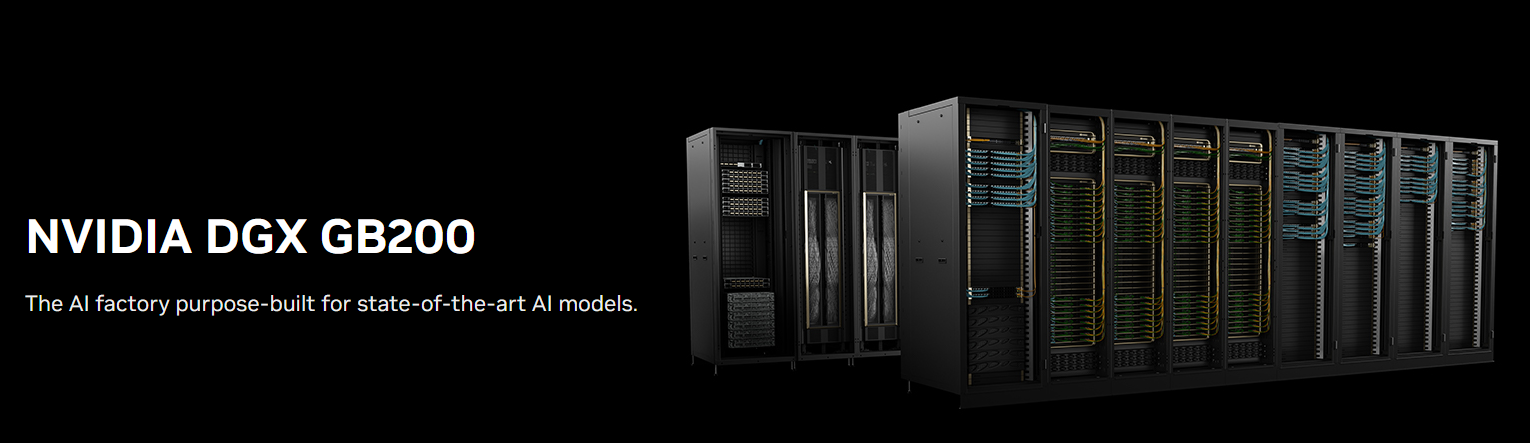
(source: Nvidia)
Why This Matters for Investors
Nvidia remains central to AI, but the ecosystem is widening. Power supplies, liquid cooling, contract assembly, and high-voltage distribution are now critical enablers of AI infrastructure. These businesses are less dependent on any one chip design and have exposure across Nvidia, AMD, custom ASICs, and beyond.
For investors, the takeaway is clear: The “AI trade” is not just about who makes the fastest GPU. It’s also about who builds the power shelves, racks, cooling systems, and servers that make those GPUs usable at scale. Many of these companies, from Delta Electronics to Foxconn and Celestica, are constituents in the ROBO Global Robotics & Automation Index (ROBO), giving diversified exposure to the broader infrastructure powering AI.
The Road Ahead
Advisors and investors should look beyond the headlines of a single stock and focus on the stack of companies building the backbone of AI computing. The ecosystem is on fire, and it’s only getting hotter.
Next up? We’ll be discussing and breaking down the AI “Inference Economy” and “Edge AI,” so stay tuned.
Looking for regular updates? Subscribe here for weekly insights on robotics, AI, and healthcare technology, delivered straight to your inbox.
For more news, information, and analysis, visit the Disruptive Technology Content Hub.
ROBO is the underlying index for the ROBO Global Robotics & Automation ETF (ROBO), the L&G ROBO Global Robotics and Automation UCITS ETF (ROBO.LN), and the Global X ROBO Global Robotics & Automation ETF (ROBO.AU).
THNQ is the underlying index for the ROBO Global Artificial Intelligence ETF (THNQ) and the L&G Artificial Intelligence UCITS ETF (AIAI.LN).
VettaFi is the index provider for ROBO ETFs, THNQ ETF, and AIAI.LN, for which it receives an index licensing fee. However, ROBO ETFs, THNQ ETF, and AIAI.LN are not issued, sponsored, endorsed, or sold by VettaFi. VettaFi and its affiliates have no obligation or liability in connection with the issuance, administration, marketing, or trading of ROBO ETFs, THNQ ETF, and AIAI.LN.
