
What You’ll Learn:
This article explores how the return of tariffs under President Trump is reshaping the economic landscape and forcing advisors to reassess portfolio strategy. You’ll learn how rising import taxes could drive cost-push inflation, constrain monetary policy, and introduce new volatility into traditional portfolios. It also explains why Bitcoin—despite its risks—may serve as a useful hedge in stagflationary environments, and how advisors can distinguish its strategic role from more speculative altcoins.
With President Donald Trump back in the White House, one of his first major policy moves was the implementation of sweeping import tariffs—a fulfillment of campaign promises to prioritize American manufacturing and economic sovereignty. Tariffs starting at 10% across the board are now in effect,
While the political motivation may be clear, the economic and investment implications are more complex. For financial advisors, navigating asset allocation in 2025, these policy shifts raise urgent questions about inflation, monetary policy, and the role of alternatives like Bitcoin.
What do these tariffs mean economically?
Tariffs are import taxes designed to protect domestic industries and generate government revenue. In practice, however, tariffs act as a tax on consumers and businesses, raising costs across the supply chain and often triggering retaliatory measures.
Historical analogues are cautionary:
- The Smoot-Hawley Tariff Act (1930) worsened the Great Depression.
- 1980s U.S.-Japan trade frictions led to inflation and supply-side inefficiencies.
- Trump’s own 2018–19 tariff wave against China raised U.S. consumer prices and distorted global trade.
In 2025, we are already seeing echoes of these dynamics. Importers are front-loading inventory, consumers are rushing to buy big-ticket items ahead of pricehikes, and headline inflation is ticking upward. While this creates the illusion of economic strength, the inflation it produces is cost-driven and inefficient, not growth-driven.
The macro landscape for financial advisors
Trump’s policy mix may lead to a unique stagflationary environment, where both inflation and unemployment pressures rise.
Advisors should be prepared for:
- Supply-side inflation, especially in autos, electronics, and energy.
- Labor market tightness, as stricter immigration policies reduce workforce flexibility.
- Policy confusion, as the Fed weighs inflation against slowing growth.
This is a difficult backdrop for traditional portfolios—and one where alternative assets, including Bitcoin, may take on greater strategic relevance.
Bitcoin in the crosscurrents
Bitcoin is now held in a wide range of portfolios, including ETF wrappers and digital SMA strategies. With over 560 million global users (according to Triple A) and growing institutional access, understanding Bitcoin’s macro behavior is essential.
According to James Butterfill, Head of Research at CoinShares, if – short-term–“these tariffs could weigh on Bitcoin initially” because “when inflation rises for the wrong reasons—costs, not demand—it often sparks rate hike fears and tighter liquidity, which hurts risk assets,” long-term “eventually, markets will recognize the Fed is boxed in—it can’t fight cost-push inflation with rate hikes forever. That’s when Bitcoin reclaims its narrative as a hedge, especially if real yields start falling.”
Bitcoin’s rally during the 2023 banking crisis (when equities faltered) is a compelling example of this decoupling in moments of stress.
Bitcoin vs. altcoins: advisors, know the difference
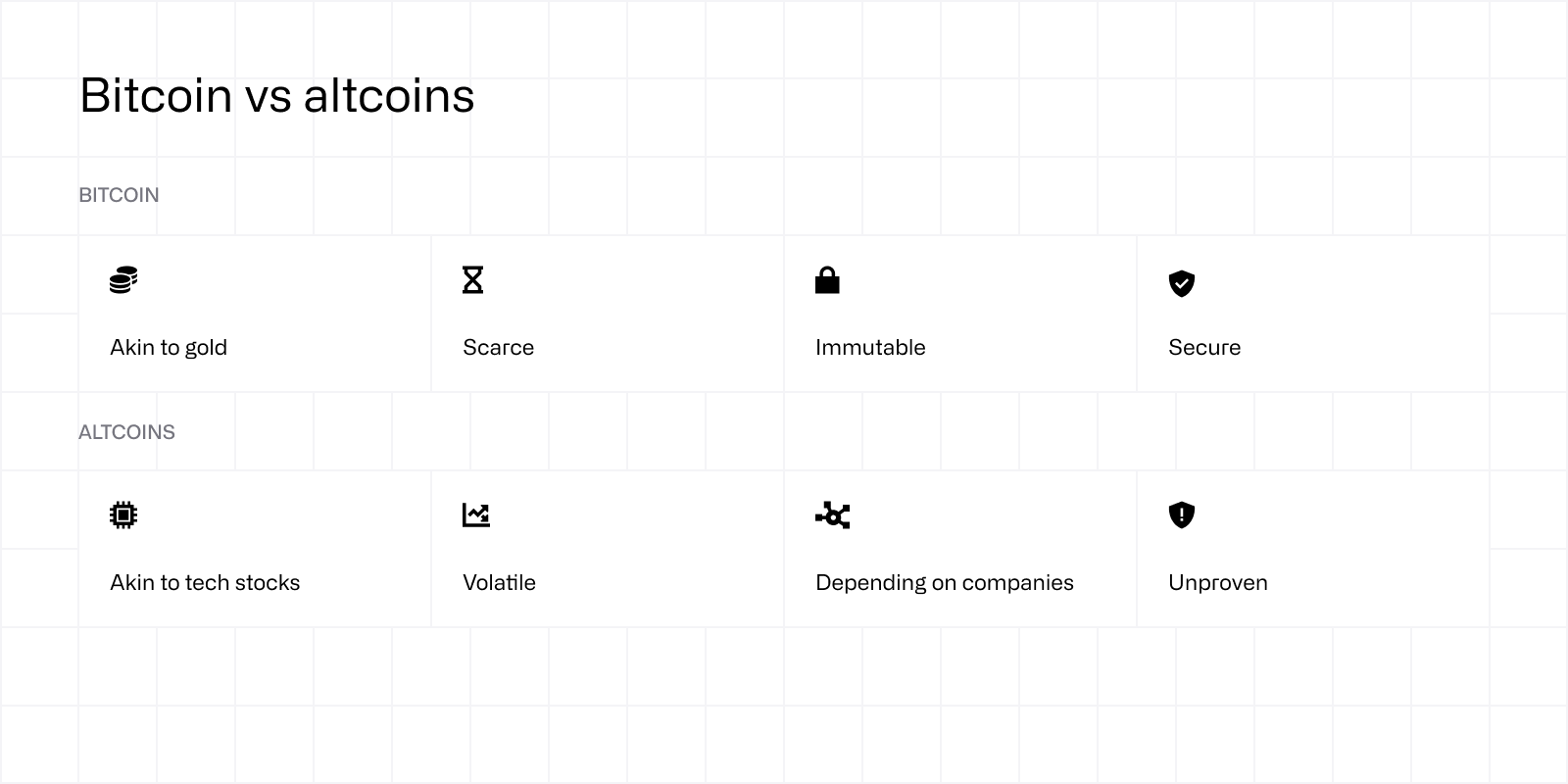
When it comes to altcoins, meaning digital assets other than Bitcoin, the dynamics differ significantly. It is a different topic, as “Ethereum and other altcoins are more growth-correlated,” says Butterfill. “They behave like tech stocks. Bitcoin, on the other hand, is increasingly viewed as digital gold.”
For advisors, this distinction matters:
- Bitcoin may suit clients seeking inflation hedges or store-of-value assets.
- Altcoins are better suited for high-growth, high-risk buckets.
Allocating accordingly—especially within frameworks like model portfolios or digital SMAs—can help advisors build more tailored crypto strategies.
Portfolio Implications: what tariffs mean for advisors
With Trump’s tariff regime in full swing, the near-term market impacts are becoming clearer:
- Inflation is back, but it’s inefficient inflation—not the kind tied to strong demand.
- Growth is fragile, as trade tensions raise costs and reduce global coordination.
- Rate policy is constrained, creating tail risks for traditional bonds and equities.
Bitcoin, while volatile, offers a compelling hedge against both inflation and monetary policy error. For advisors balancing client portfolios, that makes it worth a closer look—not as a replacement for gold, equities, or bonds, but as a complementary asset with unique risk-return drivers.
Bottom Line:
The tariff era has officially returned. Whether it leads to broader trade wars or more surgical economic adjustments remains to be seen. But one thing is certain: the rules of the global economy are changing fast—and so are the tools advisors must use to protect and grow wealth.
Bitcoin may not be immune to policy shocks—but it might be one of the few assets, alongside gold positioned to weather them on its own terms.
Why This Matters to Advisors:
The reintroduction of tariffs adds a new layer of macro complexity for financial advisors. Inflation risks are shifting from demand-driven to cost-driven, and central banks may have limited tools to respond. In this environment, advisors need to consider non-traditional hedges. Bitcoin, increasingly viewed as digital gold, offers a differentiated risk-return profile that can help protect portfolios from monetary policy missteps and inflation shocks. Advisors who understand its macro behavior and regulatory access points—like ETFs—are better positioned to help clients adapt to an evolving global market.
