
What You’ll Learn
In this article, you’ll discover the true scale of illicit crypto activity and how it compares to traditional financial crimes. You’ll learn how blockchain transparency makes crypto transactions inherently traceable, with stablecoins—not Bitcoin—being the primary assets involved in illicit use. The article highlights the growing role of regulatory bodies, advanced analytics tools, and KYC/AML protocols that enhance crypto’s legitimacy. You’ll gain insights into how these developments shape the narrative and how to address client concerns with confidence.
It is right to question the legitimacy and safety of any emerging asset class. With crypto, headlines often highlight criminal use cases—ransomware attacks, hacks, darknet transactions. However, the reality is far less dramatic, and much more aligned with what regulators and enforcement agencies have confirmed: illicit activity in crypto is small, traceable, and shrinking.
The Facts: Crypto crime is a rounding error
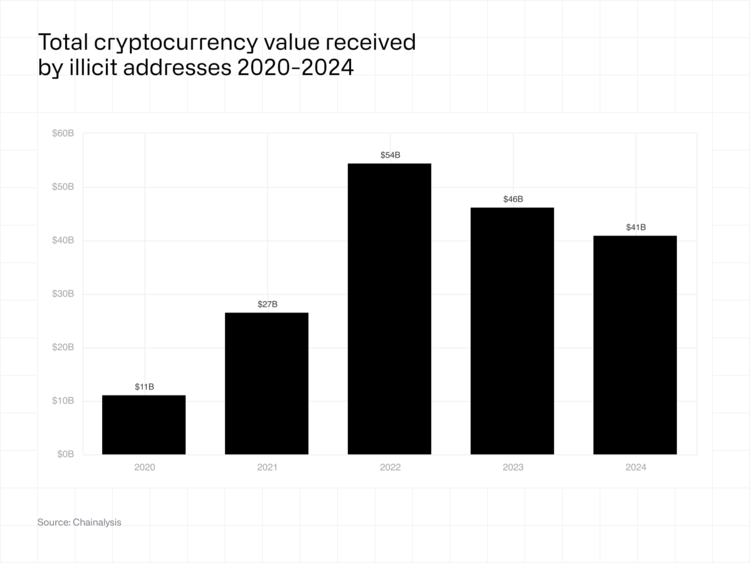
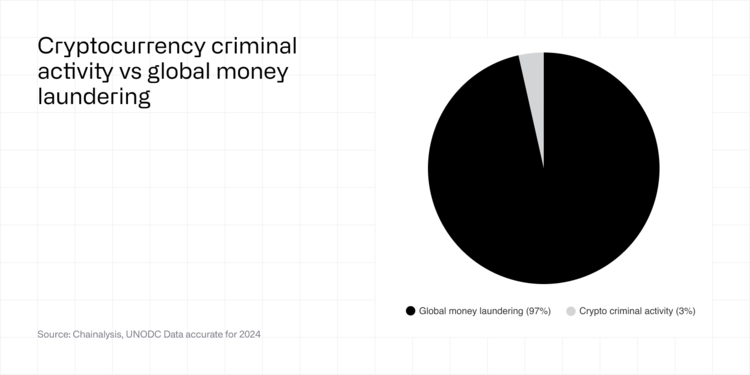
According to blockchain analytics firm Chainalysis, $40 billion worth of crypto was linked to illicit activity in 2024. That’s about 0.14% of total on-chain crypto transaction volume, and a fraction of the $15+ trillion total crypto market turnover.
In comparison:
- The UN estimates $800 billion to $2 trillion is laundered annually through traditional financial institutions.
- Europol states that up to 30% of all €500 banknotes have been involved in money laundering.
- Crypto-related ransomware activity totaled only $813.55 million in 2024, a 35% decrease from 2023. compared to an estimated $6 trillion in global cybercrime losses.
Blockchains are a terrible place to hide
Unlike cash, crypto transactions are permanently recorded on public ledgers. This transparency makes cryptocurrencies an inherently poor choice for criminals. US agencies like the FBI, along with partners like Chainalysis and Elliptic, have used blockchain data to trace and seize illicit funds. The FBI’s largest-ever asset seizure—$3.6 billion—was made possible by tracking stolen Bitcoin on-chain.
Moreover, one of the most interesting facts about crypto-related criminal activity is that, according to Chainalysis, Bitcoin is not the primary asset involved—stablecoins are. In fact, stablecoins (cryptocurrencies pegged to fiat currencies) account for over 63% of illicit activity, while Bitcoin transactions represent less than 25%.
Even former Acting CIA Director Michael Morell has acknowledged that “blockchain is a powerful forensic tool,” and that Bitcoin is no more prone to criminal use than fiat currency.
Misperception vs. reality: What Advisors should know
It’s critical for wealth managers and fiduciaries to distinguish media narrative from actual data:
- Crypto is traceable and regulated: Exchanges follow KYC/AML protocols. Agencies like FinCEN, the SEC, and the IRS actively monitor crypto markets.
- Tools to fight crime are improving: Advanced analytics can now even “demix” anonymized transactions, including those involving tools like Tornado Cash.
- Global law enforcement is engaged: The US government has shut down major crypto mixers and prosecuted high-profile cybercrime cases involving digital assets.
- With ETFs, the underlying assets are provided by regulated intermediaries, ensuring the legitimacy and origin of the funds.
Why this matters for advisors
Clients increasingly ask about crypto, and the headlines they see often paint a misleading picture. As an advisor, it’s crucial to separate fact from fiction and guide clients with accurate, data-driven insights. Understanding crypto’s traceability, the small share of illicit use, and the evolving regulatory landscape equips you to address concerns and highlight opportunities. With this knowledge, you can position yourself as a trusted resource, ready to help clients navigate the growing role of crypto in diversified portfolios.
