
What you’ll learn
In this article, you’ll explore how Bitcoin mining has evolved into a major force driving infrastructure, energy grid optimization, and economic revitalization in the U.S. You’ll understand the mechanics of mining, its impact on rural and post-industrial regions, and how miners are contributing to clean energy integration. Additionally, we’ll examine the investment potential of publicly traded mining companies and how this sector fits into broader digital infrastructure themes. For advisors, it offers a timely opportunity to align clients with emerging industrial and technology trends without directly holding crypto.
What is Bitcoin mining
Bitcoin mining is the process of validating transactions on the Bitcoin network using high-powered computing systems. In return, miners receive newly issued Bitcoin, which serves as both an incentive and a mechanism to secure the network.
What began as a niche hobby has matured into a capital-intensive, industrial-scale operation. Today, most mining activity is conducted by publicly listed U.S. companies operating large data centers. The sector is expanding rapidly due to rising institutional demand, improved regulatory clarity, and the global shift in mining leadership toward the United States.
Energy capacity and industrial growth
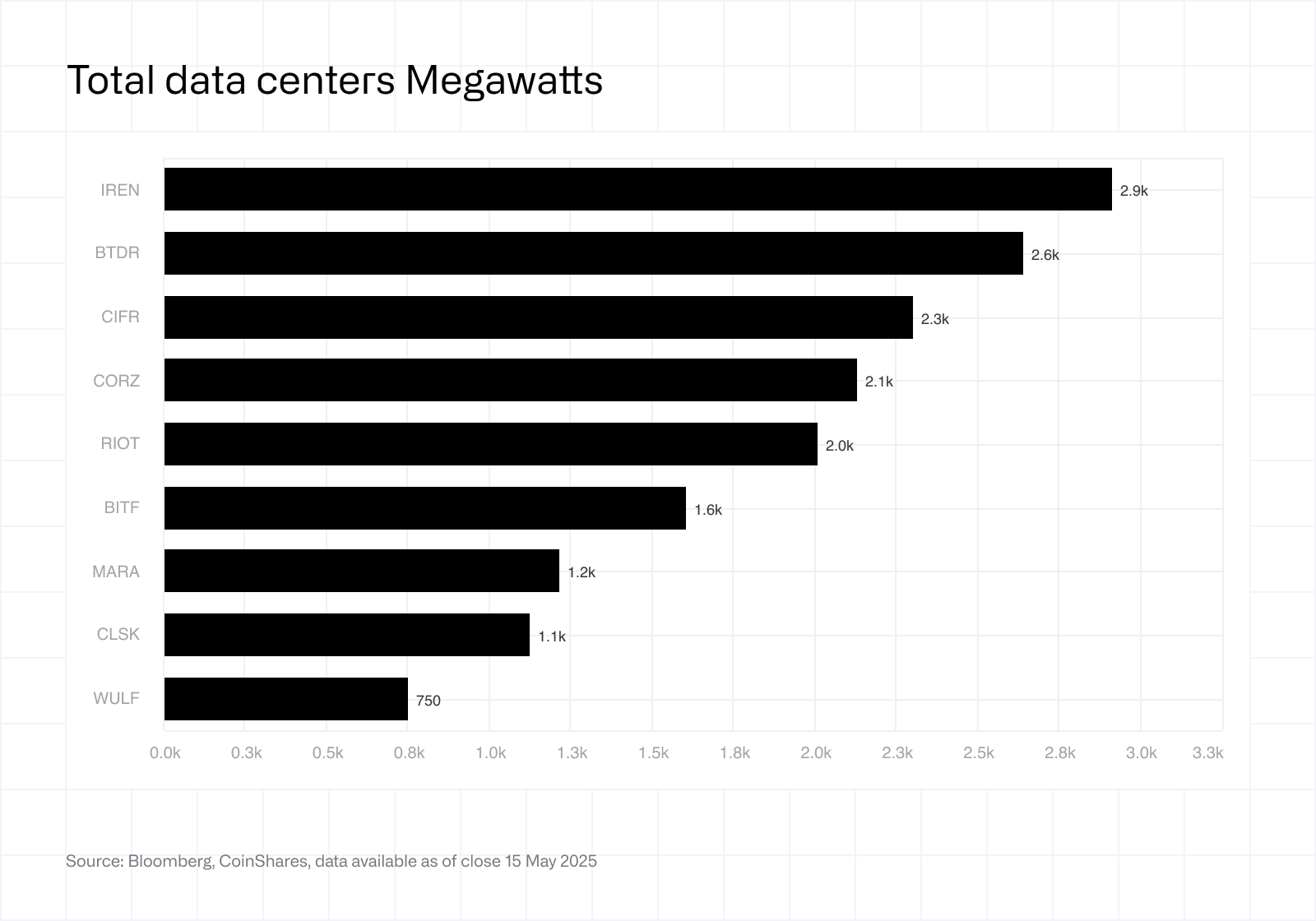
As Bitcoin mining scales, so does its infrastructure. Facilities have evolved from garages to massive warehouses, many exceeding 100,000 square feet. This growth parallels an increase in power demand, with miners now consuming thousands of megawatts across dozens of U.S.-based sites. According to CoinShares’ research, over 70 mining sites were operating in the U.S. as of January 2025—a more than 50% year-over-year increase, driven primarily by acquisitions and infrastructure build-outs.
Importantly, miners are helping to optimize the U.S. energy grid. By acting as flexible power buyers, they support the integration of renewables like wind and solar—purchasing excess energy during off-peak hours and curtailing usage during surges. In energy-forward states like Texas, this model has become a model for how mining supports grid stability and long-term infrastructure investment.
U.S. real-world Impact
Bitcoin mining has a real impact on civil society. “When communities recognize the benefits Bitcoin mining brings both from a tax base, from a job base the perception shifts”, U.S. Bitcoin miner CleanSpark’s CEO Zach Bradford explained to CoinShares this year. Operators are investing heavily in rural and post-industrial regions, building data centers, retrofitting shuttered plants, and developing energy partnerships that would be prohibitively expensive without private-sector involvement.
From upstate New York to small towns in Georgia and Texas, miners are helping transform underutilized land and outdated power infrastructure into productive, revenue-generating assets. In many cases, local governments avoid taxpayer spending by partnering with miners to fund new energy facilities and broadband improvements. “Taxes are probably the most important thing because we can provide an outsize return to the community’s tax base”, Zach Bradford detailed.
Job creation and local transformation
Mining has emerged as a significant driver of job creation—both directly and indirectly. Mining operators hire for roles in facility management, network maintenance, security, and logistics. According to industry multipliers, each mining job can support several more in construction, transportation, and electrical services.
In towns previously hit hard by factory closures or industry offshoring, Bitcoin mining has become a source of renewal. Facilities often launch in communities with populations under 10,000, providing high-quality, mid-skill jobs and restoring local tax bases.
A study conducted by the Perryman group, and commissioned by the Texas Blockchain Council and the Digital Chamber, estimated that U.S. Bitcoin miners expenditures resulted in $2.58 billion in income for workers both directly employed by mining operations and in related industries. On top of that, the research estimates that this industry created over 31,000 jobs in 2024.
The business of U.S. Bitcoin miners
Bitcoin miners’ profitability depends on factors like Bitcoin’s market price, the cost of electricity, mining difficulty, and hardware efficiency. Miners aim to optimize operations by locating in regions with low-cost, reliable energy—often forming partnerships with renewable or flexible power sources. As public companies, many also generate revenue through energy management services or grid stabilization programs, making Bitcoin mining not just a digital activity but a capital-intensive, energy-driven industry embedded in the broader economy. As one of the latest CoinShares reports pointed out, “Bitcoin miners offer a play on the growth of data center infrastructure, energy markets, and the monetization of compute”. According to the same publication, “most mining operations remained profitable at the prevailing market price of around US$82,000 per bitcoin” in the last quarter of 2024. 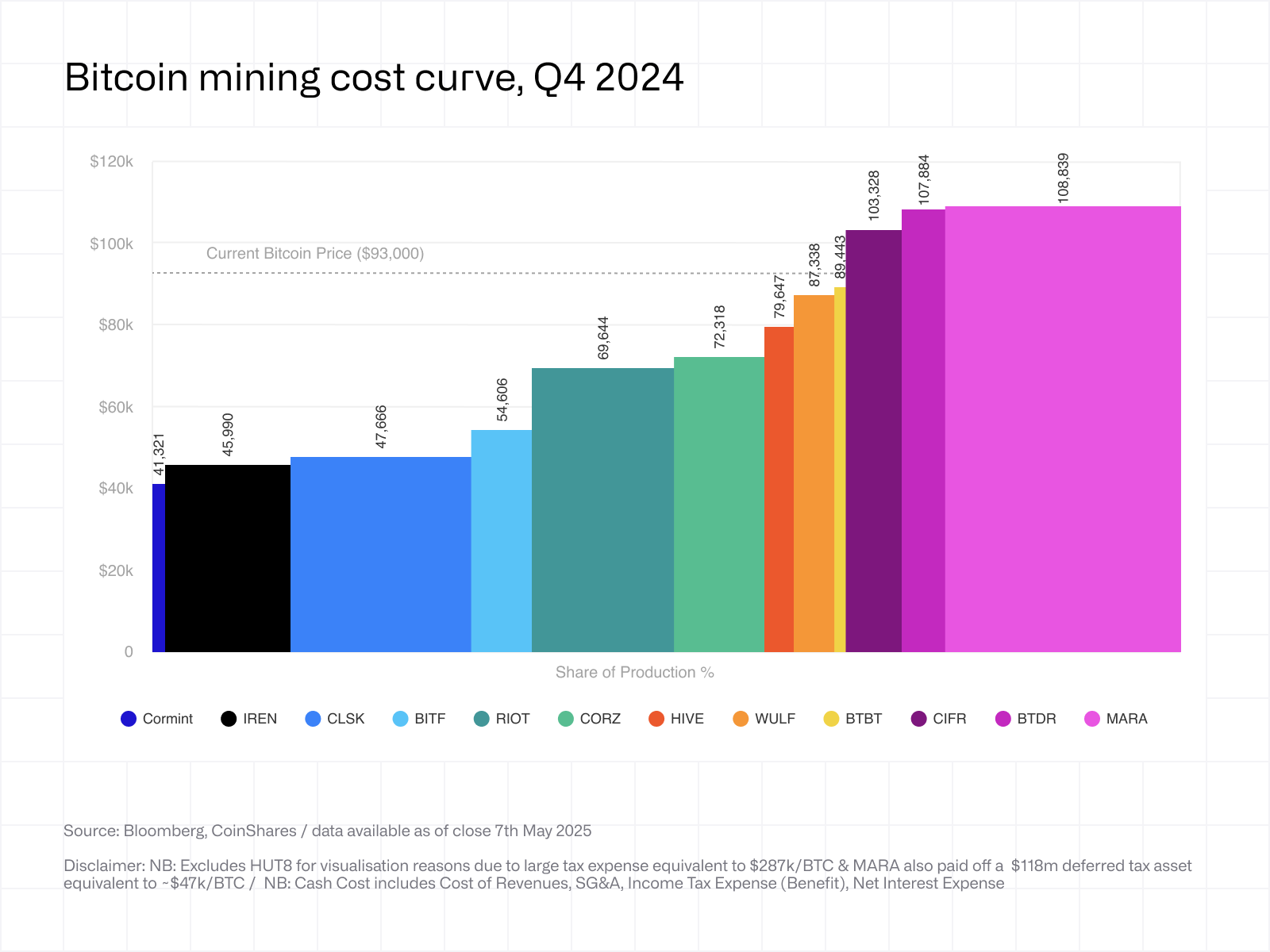
Why this matters to advisors
For advisors, Bitcoin mining represents an emerging opportunity within the digital infrastructure theme. The sector combines elements of energy, technology, and digital assets—offering a way to gain exposure to the broader growth of the Bitcoin ecosystem without directly holding crypto.
Publicly traded miners and ETFs focused on the sector offer accessible vehicles for client portfolios. As the industry grows, these investments may benefit from rising Bitcoin demand, improved energy economics, and global leadership in clean industrial technology.
Mining is no longer speculative—it’s industrial, scalable, and contributing to American economic growth. For advisors helping clients navigate real asset diversification and thematic investing, Bitcoin mining is a trend worth watching—and increasingly, allocating to.
