
In September of last year, following the release of the World Robotics Report by the International Federation of Robotics (IFR), a panel discussed the feasibility of humanoids entering homes in the not-too-distant future. The consensus at the time was that the current generation of humanoid robots was neither safe, dexterous, nor cheap enough to be useful within a household.
During that discussion, a concept emerged that is now playing out across the industry in real time. An ultimate, all-purpose humanoid that can seamlessly transition from welding car frames to folding laundry would no doubt be revolutionary,. But something more logical is becoming apparent as we move deeper into the current robotics super cycle. There will likely be different humanoids for different tasks. After all, we’re leaving behind the days when developing a single robot would take enormous resources. Why should one robot be able to do everything?
The recent contrast between Boston Dynamics’ Atlas and Fauna Robotics’ (recently acquired by Amazon) Sprout hints at what the future may look like. In that future, humanoids won’t be defined by a single form factor. Instead, they will be defined by specialized platforms built for specific tasks. After all, no one expects their washing machine to also mow the lawn.
The Purpose-Built Factory Worker: Atlas
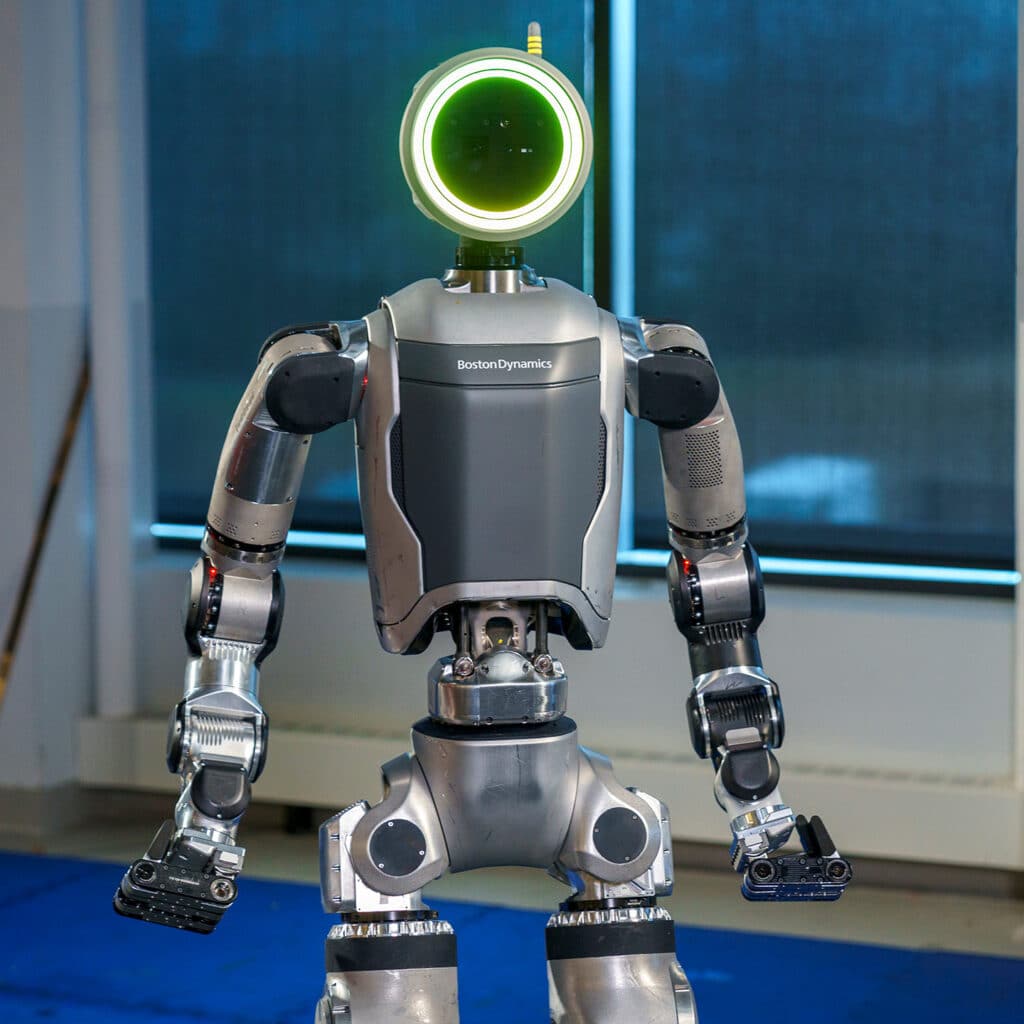
On the industrial side, we have Boston Dynamics’ Atlas. Speaking after its launch, the design and engineering team were keen to explain that the latest Atlas is “a departure from the typical humanoid look, favoring industrial utility over human likeness.” With custom actuators two to three times stronger than off-the-shelf options, passive heat distribution to eliminate failure-prone fans in the limbs, and a 110-pound instant payload capacity, Atlas is built strictly for the factory floor. It looks like a machine because it has to act and work like one.
Atlas Prioritizes Industrial Utility Over Human Likeness
 Source: Boston Dynamics
While much was made about purposefully abandoning the traditional, approachable aesthetic in favor of rugged utility, Atlas still very much looks like a friendly humanoid, complete with a cute round face, rather than the pure industrial machine the Boston Dynamics team tried to paint. Still, the team chose to highlight the shift in appearance. Perhaps this points to their recognition of a market ready to invest, with a focus on how these machines can work, maintain uptime (repairability), and deliver on ROI. In short, they see their clients moving away from questions about feasibility or appetite to questions about implementation. This is a significant step from where the industry was a year ago.
The Approachable Consumer Platform: Sprout
On the opposite end of the spectrum is Sprout. In late March 2026, Amazon accelerated its push into consumer robotics by acquiring New York-based startup Fauna Robotics. Their flagship bipedal humanoid is everything Atlas is not.
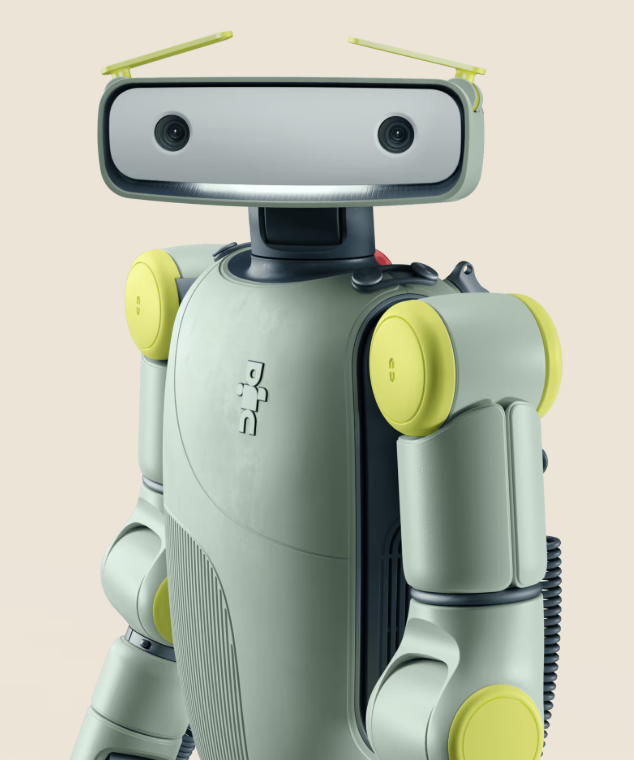
Sprout’s Soft-Touch Design Targets Human Interaction
Source: Fauna Robotics
Standing just 42 inches tall and weighing only 50 pounds, Sprout isn’t going to carry heavy payloads or weld automotive parts. Instead, it features a soft-touch exterior, expressive capabilities, and an approachable design engineered specifically for human interaction in homes, schools, and social spaces. Currently positioned as a developer platform, Sprout runs on an embedded Nvidia Jetson Orin computer. It is designed to form memories and engage naturally with people.
It must be said that Sprout is overall still in early development and commercialization stages. It’s unlikely to enter anyone’s home anytime soon. But Fauna, a company founded in 2024, has been able to develop a unique platform capable of serving a market that the big players had not been prioritizing. That speaks volumes about the fluidity of the robotic scene today.
In acquiring Fauna, Amazon is betting that the domestic and service sectors require a fundamentally different machine, one where approachability, software integration, and safety around humans (and pets!) matter far more than raw torque.
Different Tasks, Different Bots: The ROBO Advantage
This divergence is a good one for the robotics ecosystem. Just as the automotive industry relies on both heavy-duty trucks and compact commuter cars, the automated economy will likely require industrial humanoids, domestic humanoids, and many subsets within those categories. Trying to build one robot to do all creates a “jack of all trades, master of none” scenario.
For the ROBO Global Robotics and Automation Index (ROBO), this specialization presents a major tailwind. It expands the total addressable market (TAM) by opening new, currently unserved verticals. Meanwhile, it multiples the demand for core components. The strategy covers both of these.
A key advantage of the ROBO strategy is that, because it is guided by a board of strategic advisors made up of world-renowned robotics pioneers and industry experts, it is uniquely positioned to evaluate the entire humanoids ecosystem. This means the index goes beyond just holding big names. It allows the strategy to actively identify and capture the developers bringing the emerging humanoids to life, as well as the “picks and shovels” companies making the components and technologies that are enabling the rapid expansion of humanoids.
By combining the component makers with the end-product creators, the strategy exposes investors to the full spectrum of the humanoid expansion, regardless of whether the factory floor or the living room scales first.
ROBO is the underlying index for the ROBO Global Robotics & Automation ETF (ROBO), the L&G ROBO Global Robotics and Automation UCITS ETF (ROBO.LN), and the Global X ROBO Global Robotics & Automation ETF (ROBO.AU).
Related Research
And the Winner Is… Robotics (Again)
Robots: AI’s Real-World Champions
Webcast: From Digital to Physical: AI’s Move into the Real World
Looking for regular updates? Subscribe here for weekly insights on robotics, AI, and healthcare technology, delivered straight to your inbox.
For more news, information, and analysis, visit our Artificial Intelligence & Disruptive Technology Content Hubs.
vettafi.com is owned by VettaFi LLC (“VettaFi”). VettaFi is the index provider for the ROBO ETFs, for which it receives an index licensing fee. However, the ROBO ETFs are not issued, sponsored, endorsed, or sold by VettaFi. VettaFi and its affiliates have no obligation or liability in connection with the issuance, administration, marketing, or trading of the ROBO ETFs.
