
A compelling observation was made by Jeffrey Sherman, deputy chief investment officer at DoubleLine, on stage at the Astoria Advisors Macro Summit. He had just stated, “As a bond investor, I’m here to tell you that we’re not special, but that we tend to be more risk-averse.”
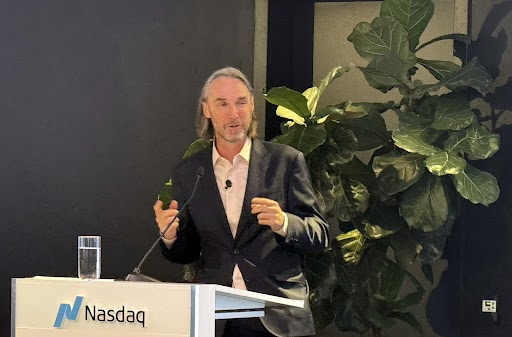
While Sherman discussed where bond investors are currently being rewarded for risk, the market at large remains divided on positioning. Nearly everyone I hear from thinks the Fed will cut rates this week. But there is a range of views on how to position a bond portfolio.
Ditch the Index? Sherman’s Case for Active Bond Picking
According to Sherman, it is a credit-picker’s market. Since we are later in the economic cycle, the easy money has been made. He believes that index-based investment-grade and high yield valuations are rich.
The DoubleLine Opportunistic Core Bond ETF (DBND) is a well-diversified active ETF run by Sherman and colleague Jeffrey Gundlach. At the end of September, DBND’s largest credit allocation was to investment-grade rated bonds (40% of assets) primarily composed of corporate and securitized debt, with just 10% in high-yield bonds. According to Sherman, investors are not getting paid to take on much high yield risk. Government (24%) and agency (22%) made up the bulk of the remainder of the portfolio.
Bianco’s Playbook: Underweight Credit, Overweight Safety
Sherman was one of many who spoke about fixed income on stage at the Astoria Macro Summit. Offering another view, Jim Bianco, president and macro strategist at Bianco Research, cited stock market concerns for his recommended underweighting toward credit. He believes the market is pricing every artificial intelligence stock as a winner. Bianco also thinks there will be an inevitable correction that impacts corporate bonds. He prefers mortgage bonds and intermediate Treasury bonds.
The WisdomTree Bianco Total Return Fund (WTBN) is a fund of ETFs that tracks an index run by Bianco Research. The WisdomTree fund’s largest position was in the iShares MBS ETF (MBB), with a 32% weighting. Meanwhile, the iShares 3-7 Treasury Bond ETF (IEI) and the iShares 7-10 Year Treasury Bond ETF (IEF) comprised 17% and 13%, respectively. Exposure to corporate bonds was notably smaller and spread across four other ETFs.
Arone: Let Someone Else Do the Homework
Michael Arone is chief investment strategist at State Street Investment Management. He was another speaker at the Astoria event. Despite working for a leading provider of index ETFs, Arone said he preferred active management for fixed income exposure given how tight spreads are and the risks of extending duration. He believed advisors would benefit from someone else doing the bond homework.
The SPDR DoubleLine Total Return Bond ETF (TOTL) is one of the actively managed ETFs offered by State Street Investment Management. Jeffrey Sherman and his DoubleLine colleagues subadvise the fund. But it is built differently from DBND with a different objective. Mortgages (48%) are heavily weighted in this fund, while investment-grade corporates (6.6%) high-yield bonds (3.5%) are lighter.
Astoria’s AGGA Bets Big on Credit
John Davi is chief executive officer and chief investment officer at Astoria Advisors. He hosted the other experts at the macro summit. Yet he noted the firm recently launched its own active fixed income ETF in April 2025. The Astoria Dynamic Core US Fixed Income ETF (AGGA) is like WTBN in that it is a fund of ETFs. However, while WTBN was underexposed to corporate bonds, AGGA has a substantial exposure.
Index-based ETFs, such as the SPDR Portfolio Intermediate Term Corporate Bond ETF (SPIB) and the iShares 5-10 Investment Grade Corporate Bond ETF (CIU), were AGGA’s top positions, at 15% and 12%, respectively. Three high yield bond ETFs represented a combined 22% of assets. According to the Astoria website, when credit spreads tighten, actively managed AGGA seeks to take on more credit, and vice versa.
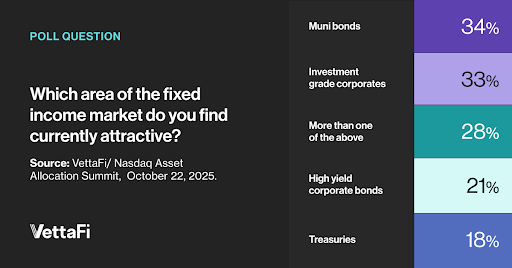
The divergence of opinion among these experts underscores the challenge for today’s bond investors. Interestingly, a recent VettaFi advisor summit poll showed attendees favor municipal bonds and investment-grade corporates over high yield or Treasuries. For those who find multiple sectors appealing — like those advisors — the diversified, actively managed ETFs discussed above may offer a compelling solution.
For more news, information, and analysis, visit VettaFi | ETF Trends.
