Data suggest U.S. inflation is picking up, which could bode well for an already hot segment of the fixed income market: Treasury inflation protected securities or TIPS.
Investors are already looking into TIPS as a hedge against rising prices ahead. TIPS returns are affected by interest-rate risk as well as changes in the principal value when the Consumer Price Index moves. TIPS will adjust their principal value upward in response to a higher CPI, but the reverse occurs during periods of deflation.
Related: Tactical ETF Strategies Have Transformed Investing
Additionally, changes in inflation expectations can cause increased trading activity as investors adjust to a new break-even rate – the yield difference between nominal Treasury bonds and TIPS of the same maturity, and cause swings in TIP prices.
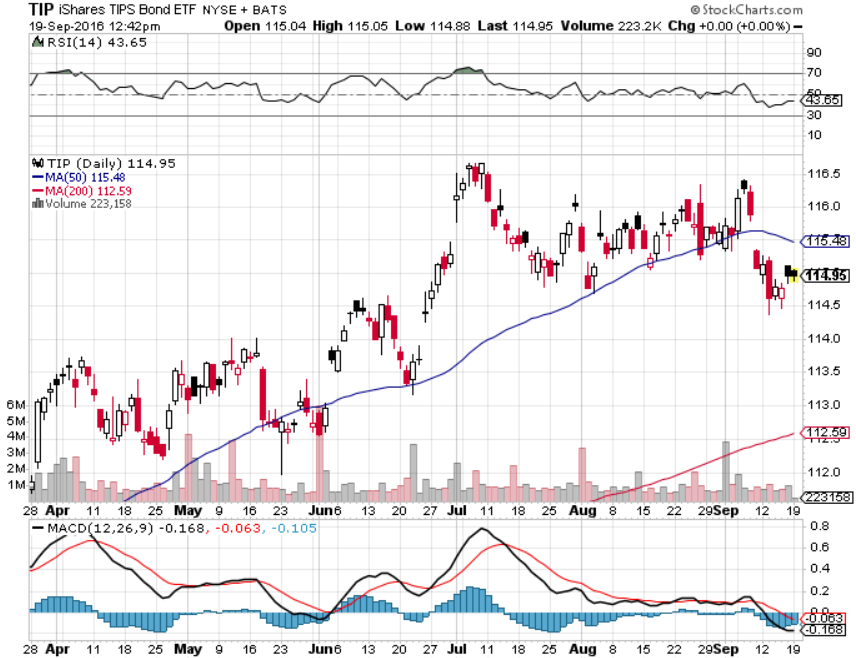
The iShares TIPS Bond ETF (NYSEArca: TIP) is one of the dominant names among TIPS ETFs. Rivals to TIP include the the Schwab U.S. TIPS (NYSEArca: SCHP) and SPDR Barclays TIPS ETF (NYSEArca: IPE).
“The gap between yields on five-year inflation-indexed securities and regular notes, a gauge of investors’ annual inflation outlook through 2021, rose to 1.37 percent Friday after a stronger-than-projected report on consumer prices, data compiled by Bloomberg show,” reports Bloomberg.
With inflation expectations rising, ETF investors have turned to TIPS investment options. Treasury inflation-protected securities, or TIPS, are a type of Treasury security that is indexed to inflation as a way to shield investors from the negative effects of inflation. The securities’ par value rises with inflation as measured by the Consumer Price Index while interest rate remains fixed. TIPS also offer investors another layer of diversification as many aggregate bond funds exclude TIPS from their holdings.
Related: Finding Investing Opportunities In Volatile Times
Investors will typically look at TIPS ahead of an inflationary period since buying TIPS after inflation has gone up means that the security has already priced in the inflation and investors would likely be overpaying for the TIPS exposure.
Potential investors should also be aware that TIPS are generally more volatile than traditional nominal Treasuries due to the inflation adjustments to their principal value.
“TIPS, have proven a winner this year in part as more investors prepare for a pickup in inflation. TIPS have returned about 6 percent in 2016 versus about 4.5 percent for conventional Treasuries, according to index data compiled by Bloomberg. TIPS had underperformed the previous three years,” reports Bloomberg.
iShares TIPS Bond ETF