With many investors still apprehensive about embracing junk bonds, investment-grade corporate bond exchange traded funds remain a popular avenue for capturing relatively low risk yields that are higher than what is found on U.S. government debt.
Currently, credit spreads are falling. Looking at corporate bonds, the diminish spread between government Treasury yields and corporate debt yields reflects investors’ lower perceived risks ahead. The Bank of America Merrill Lynch U.S./Corporate BBB Option-Adjusted Spread, which measures the borrowing costs of credit-worthy corporations, dipped to 2.07 percentage points in late April from 3.03 percentage points on February 11, reports Simon Constable for U.S. News.
Related: Checkout These Corporate Bond ETFs
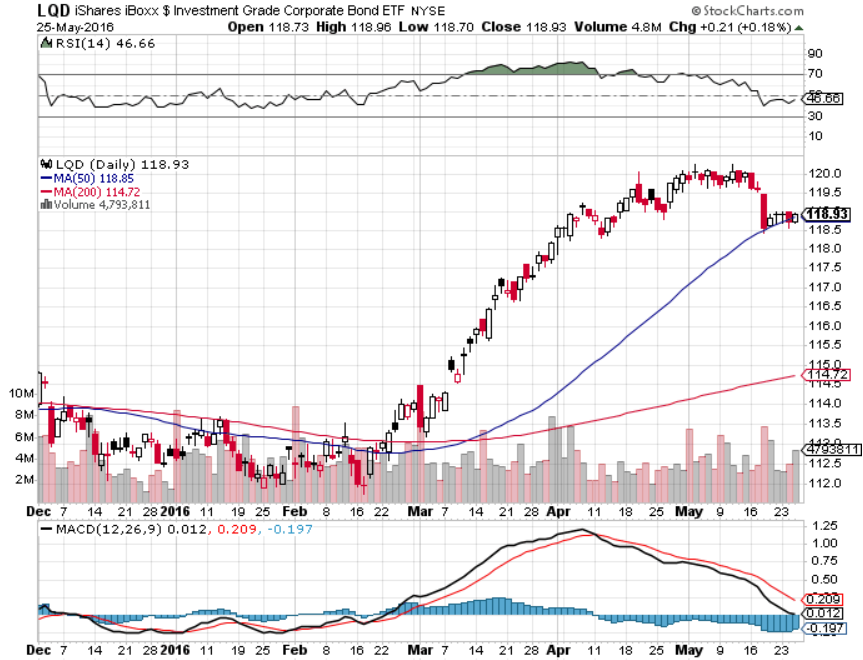
Thanks to negative interest rates throughout the developed world and still low rates here in the U.S., investors remain fond of ETFs such as the iShares iBoxx $ Investment Grade Corporate Bond ETF (NYSEArca: LQD), Vanguard Intermediate-Term Corporate Bond ETF (NYSEArca: VCIT) and SPDR Barclays Intermediate Term Corporate Bond ETF (NYSEArca: ITR).
[related_stories]According to Bank of America Merrill Lynch index data, risk premiums on U.S. investment-grade corporate debt have been cut by half a percentage point since mid-February due to rising demand from Asian and European investors. Hans Mikkelsen, head of U.S. investment-grade credit research at Bank of America Merrill Lynch, anticipates that by the year-end, premiums could dip to about 1.5 percentage points from current levels of around 1.72 percentage points as European and Asian investors funnel as much as $500 billion into American corporate bonds in 2016, or up 50% year-over-year.
Related: Reasons to Embrace Corporate Bond ETFs
“LQD has an effective duration of 8.34 years alongside a 30-day SEC yield of 3.18%. This may seem like a relatively modest income stream, but when compared against the 1.59% yield of the iShares 7-10 Year Treasury ETF (IEF), it actually stands out quite noticeably,” according to See It Market. “When examining the underlying drivers of risk and return in LQD, this ETF is certainly going to be influenced more by interest rate sensitivity than credit factors. While the credit environment is always going to be a moderate risk, the higher credit ratings of the underlying issuers help mitigate those concerns versus a basket of high yield (or junk) bonds.”
LQD is the largest investment-grade corporate bond ETF.
Due to the growing popularity and vast liquidity of corporate bond-related ETFs, more investors have turned to ETFs as a way to play the corporate debt market as opposed to trading less liquid individual debt securities.
For more news and strategy on the Bond market, visit our Bond category.
iShares iBoxx $ Investment Grade Corporate Bond ETF
Tom Lydon’s clients own shares of LQD.