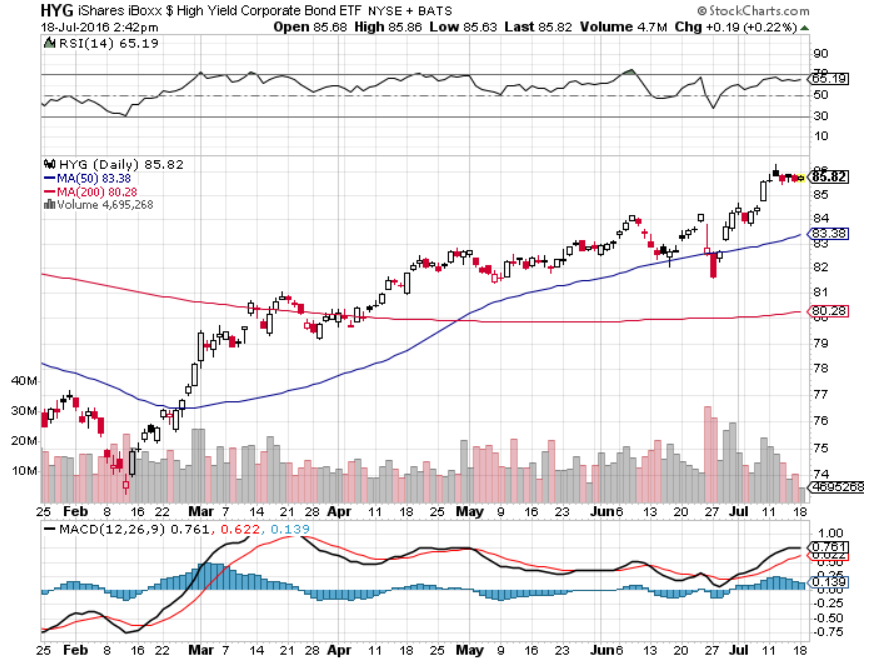
Last year, high-yield corporate bond exchange traded funds were controversial ideas. With oil prices tumbling and the Federal Reserve appearing as though it was on course for multiple interest rate hikes in 2016, ETFs such as the iShares iBoxx $ High Yield Corporate Bond ETF (NYSEArca: HYG) and the SPDR Barclays High Yield Bond ETF (NYSEArca: JNK) fell out of favor with investors.
That situation has reversed in significant fashion this year. Rebounding oil prices and diminishing chances of multiple interest rate hikes are encouraging investors to revisit junk bond ETFs, including HYG and JNK. HYG and JNK are the two largest high-yield corporate bond ETFs by assets.
Related: Wall Street Eyes Junk Bond ETF for Easy Liquidity
High-yield, speculative-grade corporate bond exchange traded funds have gotten a lot of flak over perceived liquidity issues, especially if investors experience periods of extreme market stress.
However, junk bond ETFs have proven to be sufficiently liquid as more investors eschew the primary markets for the ETF investment vehicle instead.
“ETFs that track iBoxx indices have seen unprecedented liquidity over the last month, highlighting their growing popularity among market participants,” according to financial information services company Markit.
[related_stories]“The 50-day rolling correlation between the SPDR Barclays High Yield ETF and the S&P 500 is nearing 90 percent, the highest level reached in the eight years that junk ETFs have been available. The last time that the correlation between stocks and high-yield ETFs was this high was in early 2012,” according to CNBC.
Related: U.S. Corporate Bond ETFs Among Few Attractive Investment-Grade Options Left
As many ETF observers have noted, volume begets volume. These ETFs that track notoriously illiquid markets have been growing in popularity as investors sought out liquid instruments to express their views on the fixed-income market. While trading volumes in the fund have increased, trading in the underlying debt market has not been particularly elevated, reflecting the increased usage of ETFs as a more liquid proxy for exposure.
“Some believe that the appetite for risk has increased as concern about Brexit has evaporated in recent weeks. High-beta stocks have outperformed the market average so far this month, and short interest has declined for those stocks,” reports CNBC.
While we have witnessed robust volume and activity in these bond ETFs, some naysayers were worried that investors would rush out the last second to sell bonds in response to rising interest rates, which would make it costlier for high-yield bond ETFs to meet redemptions in a notoriously illiquid speculative-grade market.
iShares iBoxx $ High Yield Corporate Bond ETF