The SPDR Gold Shares (NYSEArca: GLD), iShares Gold Trust (NYSEArca: IAU) and ETFS Physical Swiss Gold Shares (NYSEArca: SGOL) and rival gold exchange traded products have been in focus as investors look for safe-haven plays in a post-Brexit world. That could be a sign of more upside to come for already gold and the related ETFs.
Some analysts still believe that is possible gold ascends to $1,500 per troy ounce. Gold bullion prices have surged almost 20% this year as the Fed previously signaled it would slow the pace of interest rate normalization this year – higher interest rates typically weigh on gold prices since the hard asset provide no yield and would become less attractive to higher-yielding conservative debt assets in a rising rate environment.
Related: Demand Supports Gold ETFs
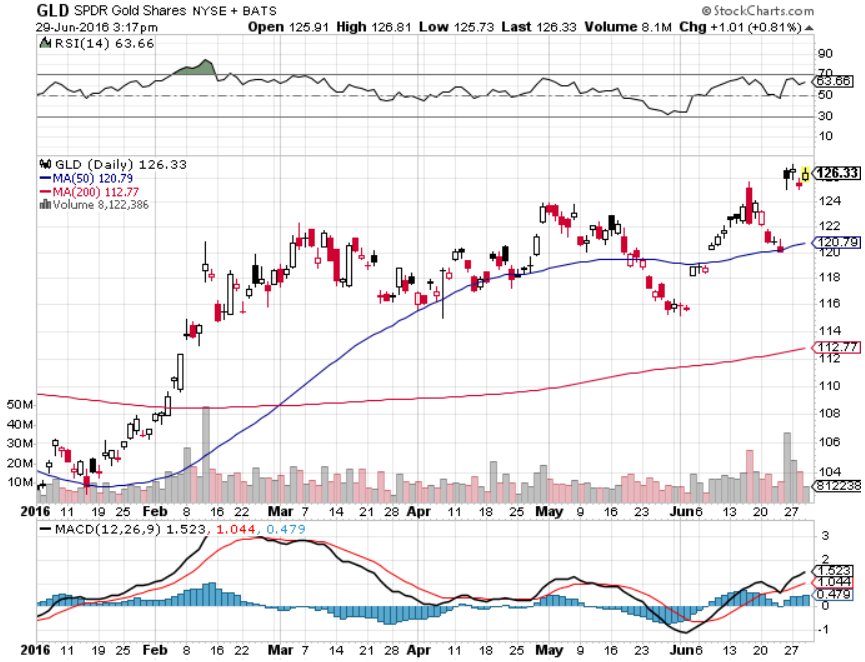
Prior to the Brexit vote, some gold market observers viewed bullion’s downside as limited if Great Britain opted to remain in the European Union. Now, gold’s technicals point to potentially significant upside on the way.
[related_stories]“Technically, this breakout is strong and there is a strong probability gold will move above $1,340 and move towards resistance near $1,580. However, there are important changes in the structure of the gold market that make the move above $1,350 and towards $1,580 more hazardous and volatile,” reports CNBC.
Robust demand is also helping gold. Demand for gold assets have surged this year. For instance, ETF flows into gold have expanded at their fastest pace since 2009. Physically backed gold ETF holdings are still one-third below the December 2012 peak, which suggest that prices can hold at about $1,200 per ounce.
Related: Bullish Forecast for Gold ETFs
However, emerging market demand for gold has not picked up yet. For instance, China has shown little demand, with the Shanghai Gold Exchange seeing little growth in volume. While the higher prices may have deterred Asian buyers, demand could pick up if prices persist in going higher, analysts said.
Even with markets waiting for Asian demand for gold to increase, the charts paint an encouraging picture for gold and the relevant ETFs. Also helping the case is the massive amount of gold own by ETFs, such as GLD and SGOL, throughout the world.
“This structural change in the market means gold demand is now also closely linked to brokerage account margin calls as ETFs are a derivative trading instrument. Such high exposure to margin calls is a great concern during periods of high market volatility. It means that the gold price may react much more quickly in either direction than the fundamentals might suggest. It means that price targets are reached more quickly, and that retreats are more sudden and severe,” adds CNBC.
For more information on the Gold ETFs, visit our Gold category.
SPDR Gold Shares
Tom Lydon’s clients own shares of GLD.