Count preferred stocks and the relevant exchange traded funds among the high-yielding, income-generating asset classes that are benefiting from the Federal Reserve’s reluctance to raise interest rates to this point in 2016.
Low inflation helps bond investors generate a higher real yield, or yield after accounting for the inflation bite.
Moreover, international government bond yields have been depressed to near zero levels, with Germany 10-year yields down 45 basis points and Japanese 10-year yields dipping into the negative territory, while yields on 10-year Treasury bonds were hovering around 1.83%. Consequently, international fixed-income investors may be steering toward higher-yielding U.S. Treasuries, which may help put a lid on rising rates in the U.S.
Related: Revenge of the Nerds (all Thanks to the DOL)
However, inflation is a focus of the Fed and so is a possible interest rate hike, two scenarios that could test investors’ appetites for preferred ETFs, such as the iShares U.S. Preferred Stock ETF (NYSEArca: PFF) and the PowerShares Preferred Portfolio (NYSEArca: PGX).
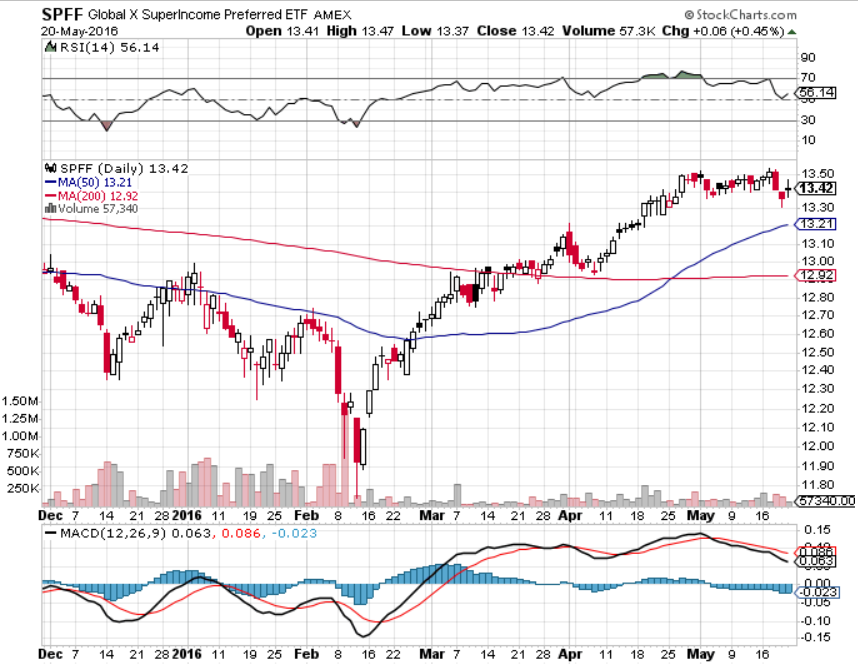
Another option to consider among preferred ETFs is the Global X SuperIncome Preferred ETF (NYSEArca: SPFF), which has a 30-day SEC yield of 6.8%.
[related_stories]“With $209 million in assets under management, SPFF is not small. Plus, this preferred stock fund has some nifty features, such as the ability to hold preferred stocks issued by Canadian firms, which can help bolster yield, according to InvestorPlace.
Preferred stocks are a type of hybrid security that show bond- and equity-esque characteristics. The shares are issued by financial institutions, utilities and telecom companies, among others. Within the securities hierarchy, preferreds are senior to common stocks but junior to corporate bonds. Additionally, preferred stocks issue dividends on a regular basis, but investors are unlikely to enjoy capital appreciation on par with common shares.
Related: Fed Help for These ETFs
While preferred stocks provide investors with an attractive source of yields, potential investors should keep in mind that the assets are vulnerable in a rising interest rate environment. If rates rise, the holdings must decline in price to elevate their yield to attractive levels. Furthermore, most preferred stocks are either perpetual or long-dated, which exposes investors to significant interest-rate risk.
“The correlation of preferreds was 0.43 with High Yield Bonds, 0.39 with Common Stocks, 0.16 with 10 Year Treasuries, and 0.04 with corporate bonds (over the last 10 years ending December 2015,” according to Global X.
For more information on Fixed-Income ETFs, visit our Fixed-Income category.
Global X SuperIncome Preferred ETF