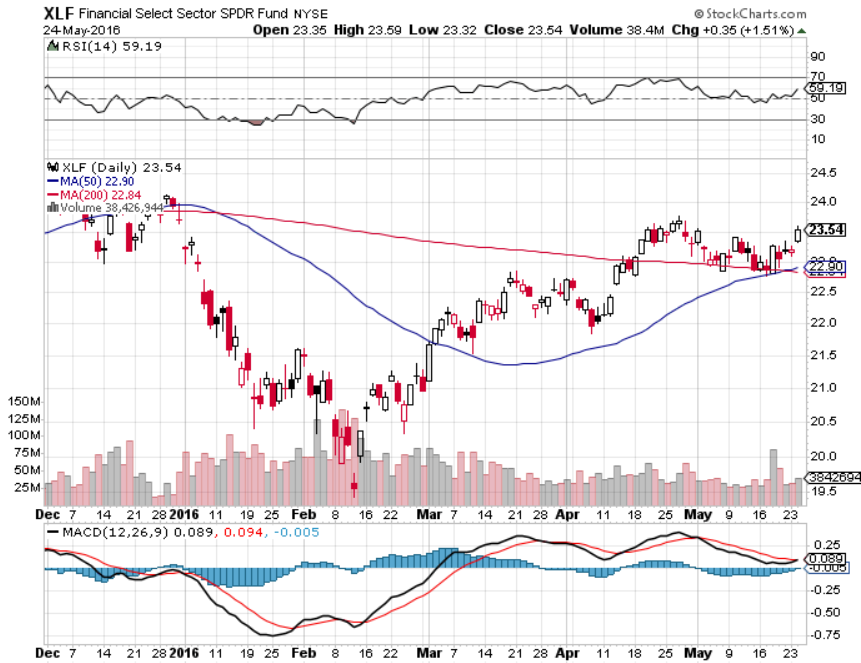
With bond markets pricing in a rate hike from the Federal Reserve next month, some familiar exchange traded funds (ETFs) are starting to benefit. That includes the Financial Select Sector SPDR (NYSEArca: XLF) and the PowerShares DB U.S. Dollar Index Bullish Fund (NYSEArca: UUP), both of which have floundered this year as the Fed has held off on raising rates.
XLF, the largest financial services ETF, and rival ETFs will benefit from expanding margins as rates climb. A rising rate environment may reflect a strengthening U.S. economy, and a healthier economy would help borrowers have an easier time repaying loans, with banks stuck with fewer non-performing assets. Moreover, rising rates means that banks will generate greater revenue from the spread between what they pay deposit savers and the prime rates they charge credit-worthy clients and other highly-rated debt.
Related: 6 Bank ETFs’ Moment in the Sun
Financial services firms, like capital markets, banks and regional banks, are among the top three industries with the highest sensitivity to changes in the 10-year Treasury yield. Over the past few years, financial stocks have underperformed the broader equities market as the Fed’s robust quantitative easing program and low interest rate policy caused the yield curve to flatten – a yield curve flattens when yields on long-term debt declines more rapidly than the yield on short-term debt, which causes a smaller spread between long- and short-term debt securities.
[related_stories]Furthermore, within the financial space, insurance companies will also capitalize on rising interest rates. Insurance stocks have typically exhibited a positive correlation with interest rates where higher rates have translated to higher growth. Along with generating greater revenue through new higher yielding debt holdings in a rising rate environment, insurers may also capitalize on a healthier economic environment as consumers purchase big-tick items and buy a home, which may mean more insurance policy coverage.
“The Federal Reserve states that it has a dual mandate for hiking interest rates, which is 2% inflation and full employment. The truth, however, is much more likely that it is watching how equities are performing. The last thing the Federal Reserve wants is to tank the markets. If equities are performing well and it is perceived by the Fed that the market can handle a quarter-point rate hike, then it will hike rates,” according to Investopedia.
Related: Struggle and Trouble Ahead for Bank ETFs?
UUP, which tracks the price movement of the U.S. dollar against a basket of currencies, including the euro, Japanese yen, British pound, Canadian dollar, Swedish krona and Swiss franc, is higher by 1.1% since last week’s FOMC minutes indicated a June rate hike is a real possibility.
Financial Select Sector SPDR