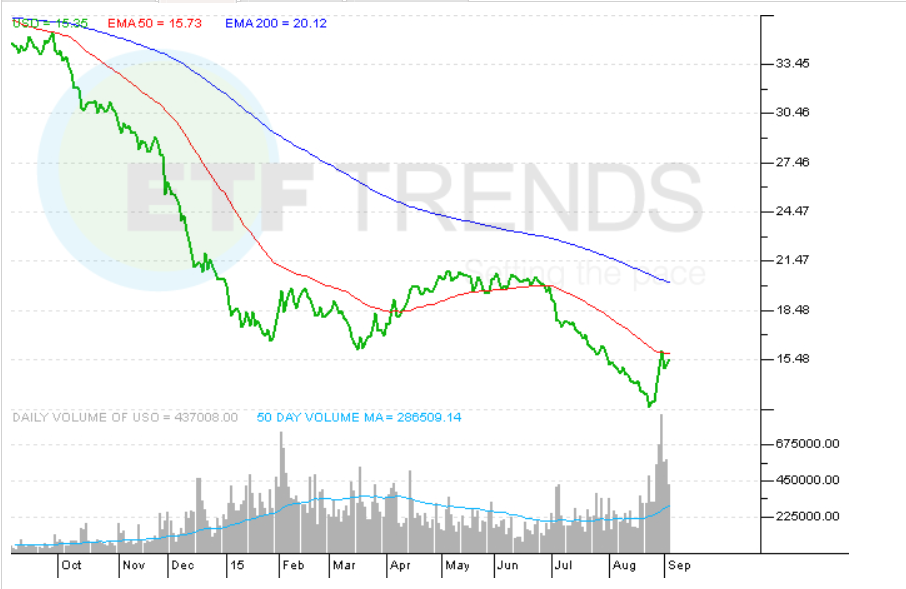
Crude oil futures and the United States Oil Fund (NYSEArca: USO), which tracks West Texas Intermediate crude oil futures, have soaring in recent days, but traders coming late to this party should tread carefully because some analysts think oil’s surge will be short-lived.
Fueling the rally in the energy space, a monthly U.S. energy report argues that global oil demand could jump by the most in six years in 2016 while non-OPEC supply stalls, which suggests that the oil supply glut could be easing more quickly than expected, Reuters reports.
USO’s pop comes after some professional traders departed oil futures, indicating they felt crude’s near-term upside was limited. “Speculators reduced their net-long position in West Texas Intermediate crude by 9.1 percent in the week ended Sept. 29, according to data from the Commodity Futures Trading Commission. Longs dropped from a 12-week high while shorts increased,” reports Mark Shenk for Bloomberg.
USO has been somewhat steady following a sharp reversal last month that forced a spate of short covering. A short position is a sale on a borrowed security. The investor needs to eventually return the borrowed stock by purchasing it back from the open market. If the price falls, the investor buys it back for less than he or she sold it for and pockets the profit. [Widening Contango Could Cut Into Popular Oil ETF’s Returns]
Global supply of oil is still strong, but there are risks to demand growth and low prices could be required throughout 2016 bring supply and demand into balance by year-end, according to Goldman Sachs, reports Chris Dieterich for Barron’s.
However, there are reasons for investors to be cautious with volatile energy ETFs. Moreover, if oil prices falls to new lows and the shale industry is unable to turn a profit, the highly leveraged industry may find it harder to repay debt obligations.
With the U.S. dollar strengthening and the Federal Reserve looking at tightening its monetary policy, the various U.S. market sectors and related exchange traded funds could behave differently in a strong USD environment.
The Trade Weighted U.S. Dollar Index has increased 15% over the past year and is at its highest level in over 10 years, writes Karen Wallace for Morningstar. Energy ETFs can prove particularly vulnerable in the face of a stronger greenback.
United States Oil Fund