Market cap-weighted exchange traded funds are topping their equal-weight rivals this year, but plenty of smart beta funds are shining bright.
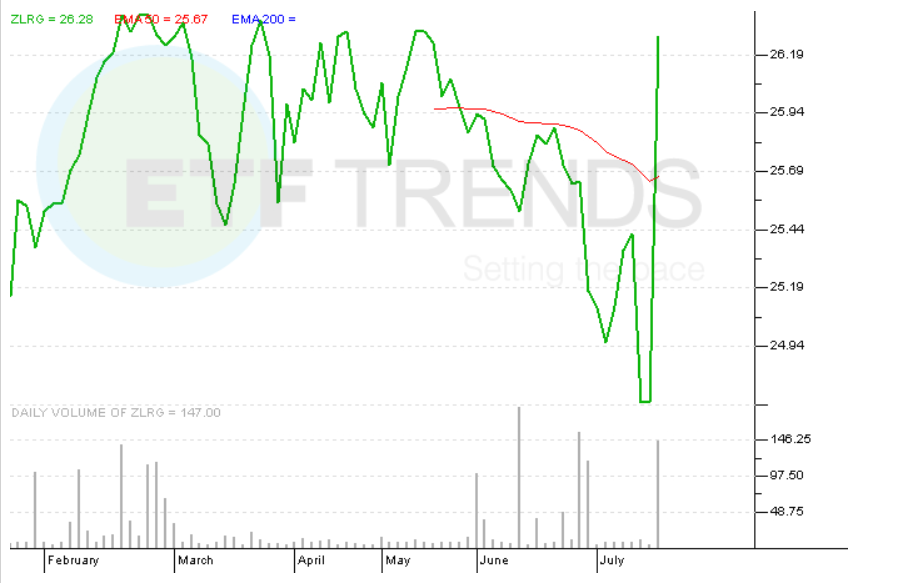
The ETFS Zacks Earnings Large-Cap U.S. Index Fund (NYSEArca: ZLRG) has offered modest out-performance of the S&P 500 since coming to market in late January, but ZLRG is picking up the pace in recent weeks. On Wednesday, ZLRG was one of just 30 ETFs that hit all-time highs.
ZLRG and its small-cap counterpart, the ETFS Zacks Earnings Small-Cap U.S. Index Fund (NYSEArca: ZSML), not only equally weight component stocks, but the two relatively new ETFs also equally weight sectors in an attempt to help provide greater diversification and better returns. [ETF Securities Expands Equity ETF Lineup With Two More New Funds]
ZLRG tracks the Zacks Earnings Large-Cap U.S. Index, but there is much more to this index than equal weighting. The index “reviews the amount of non-cash components, known as accruals, included in each company’s reported earnings. Only the 10% of firms with the lowest sector-adjusted accruals are eligible,” according to ETF Securities.
ZLRG’s recent performance is made all the more impressive when considering the bulk of the ETF’s top 10 holdings hail from the lagging industrial sector. On that note it should be noted that no stock accounts for more than 2.1% of the ETF’s weight and with 16 sectors and industries garnering weights of just over 6% apiece, ZLRG can weather an individual sector’s struggles.
In contrast, traditional market-cap-weighted indices may be top heavy and overweight stocks and sectors that have been outpeforming. During a market collapse, these same areas will likely be the hardest hit, dragging on market-cap-weighted fund.
ZLRG holds the highest ranking stocks that have the most significant positive changes in earnings estimates. Additionally, Zacks singles out non-cash components, or accruals, in each company’s reported earnings, selecting firms with the lowest sector-adjusted accruals. [A Small-Cap ETF That Targets Strong Earnings]
ZLRG offers another advantage: The ETF does not rely on just a single investment as a means of driving returns. Rather, it uses multiple factors to generate upside. By employing multiple investment factors rather than isolating just one, some new ETFs can give advisors advantages beyond those offered with traditional market capitalization-weighted funds.
ETFS Zacks Earnings Large-Cap U.S. Index Fund