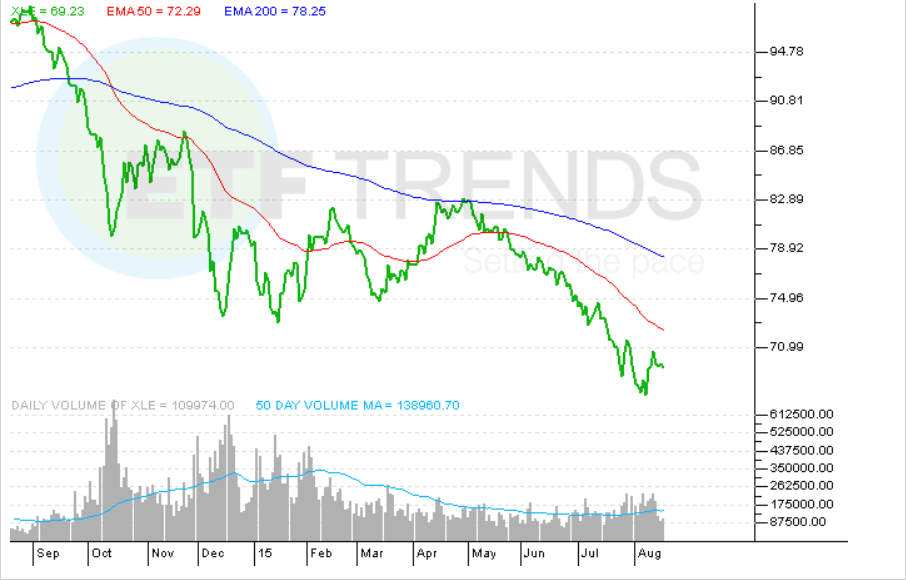
Equity-based energy sector exchange traded still face ample headwinds, but capitulation, the point at which there is no one left to abandon a particular trade, could be near for energy funds.
That could be a sign that even with crude futures residing well-below breakeven levels for many producers, energy stocks might not be far from capitulation. oil experts project crude prices will continue to dip to levels where many shale producers will be unable to generate a profit, reports Patti Domm for CNBC.
According to a recent CNBC oil survey, the majority of investors and analysts believe WTI will slide to between $30 and $40 per barrel this fall, with about 62% of respondents anticipating the WTI crude to trade between the range and stay low toward the end of the year,
Additionally, 43% of respondents believe the breakeven price for the U.S. shale industry is about $45 to $55 per barrel, and 24% estimate the breakeven level at $55 to $65. [Breakeven Becomes an Oil Headwind]
“Money managers’ net-long position in West Texas Intermediate crude declined 11 percent in the week ended Aug. 11, U.S. Commodity Futures Trading Commission data show. Short positions climbed to the highest level since March, a signal speculators see prices continuing to fall. Funds curbed bullish bets on Brent in London to the lowest level since December, data from ICE Futures Europe showed,” reports Mark Shenk for Bloomberg.
Traders can profit from more oil declines with ETFs such as the ProShares UltraShort Bloomberg Crude Oil (NYSEArca: SCO) and the VelocityShares 3x Inverse Crude (NYSEArca: DWTI). SCO tries to reflect the two times inverse or -200% daily performance of WTI crude oil while DWTI takes the three times inverse or -300% performance of crude oil. [Inverse ETFs to Hedge Against Hurdles Ahead]
The cautious play, and perhaps ultimately the better avenue for energy exposure is with an ETF like the Energy Select Sector SPDR (NYSEArca: XLE) because so few advisors are currently allocated to the energy sector. In fact, the allocation to the sector is the lowest it has been since early 2002, according to MarketWatch.
Energy Select Sector SPDR