When investors think of small-cap stocks, the first thoughts usually do not have something to do with dividends. Rarely do investors associate companies with smaller market values as having extensive dividend increase streaks or other solid dividend growth traits.
Recent data indicate income investors should give small-caps and the corresponding exchange traded funds a new look. “From the end of 2013 there has been a 10.2% increase in the number of issues paying a dividend in the S&P SmallCap 600,” according to S&P Dow Jones Indices.
Although it is a play on the Russell 2000, not the S&P SmallCap 600, the newly minted ProShares Russell 2000 Dividend Growers ETF (NYSEArca: SMDV) merits a place in the small-cap dividend ETF conversation.
SMDV, which debuted in February, tracks the Russell 2000 Dividend Growth Index. That index includes small-cap firms with dividend increase streaks of at least a decade. Index constituents are screened for liquidity and dividend status, then selected and equal weighted subject to a maximum sector weight of 30%, according to Russell Investments.[ProShares Doubles Dividend Growth Lineup]
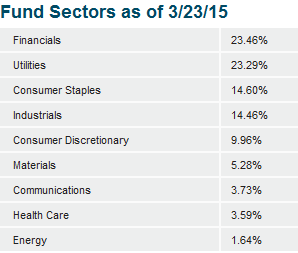
SMDV has returned almost 2.5% since coming to market, an impressive showing given the new ETF’s 23.3% weight to the utilities sector. Since SMDV debuted, 10-year Treasury yields have surged, taking the Utilities Select Sector SPDR (NYSEArca: XLU) down 7.3% in the process.
Financials are SMDV’s largest sector weight at almost 23.5%, a positive trait in an environment where investors are betting on higher interest rates and at a time when the sector is bolstering buybacks and dividends. [Higher Dividends Coming for Bank ETFs]
Although small-cap indexes remain at the low end of the dividend yield totem pole, more than half of the S&P SmallCap 600’s holdings are dividend payers and there is room for steady payout growth as “182 payers have a dividend rate less than 50% of their 12 month net GAAP income, with 235 being less than 75%,” according to S&P Dow Jones Indices.
The universe of dedicated small-cap dividend ETFs is still thinly populated, but SMDV’s older rivals have displayed an important trait, one the new ETF will likely mirror, during times of small-cap stress. Put simply, small-cap dividend ETFs outperform their non-dividend counterparts when benchmarks like the Russell 2000 come under pressure. [Small-Cap Dividend ETFs Prove Less Bad]
Much of that has to do with small-cap dividend ETFs tilting toward value and away from the growth sectors that are prominent in traditional small-cap funds. In the case of SMDV, the ETF allocates 29% of its combined weight to staples and industrials. Conversely, the new fund has no tech sector exposure and just a 3.6% healthcare weight. Those sectors are usually well-represented in non-dividend and growth small-cap ETFs.
ProShares Russell 2000 Dividend Growers ETF