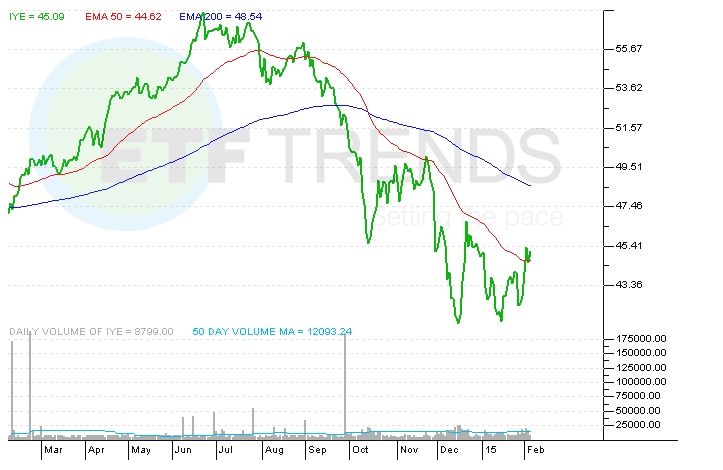
The iShares U.S. Energy ETF (NYSEArca: IYE) is just one in a long line of equity-based energy exchange traded funds that have been adversely affected by falling oil prices.
In 2014, the $1.1 billion IYE lost nearly 10%. The ETF has been better this year, though a loss 0.7% is nothing to crow about. However, more recent price action suggests IYE and rival energy ETFs are trying to perk up, as highlighted by IYE’s 6.2% gain over the past month.
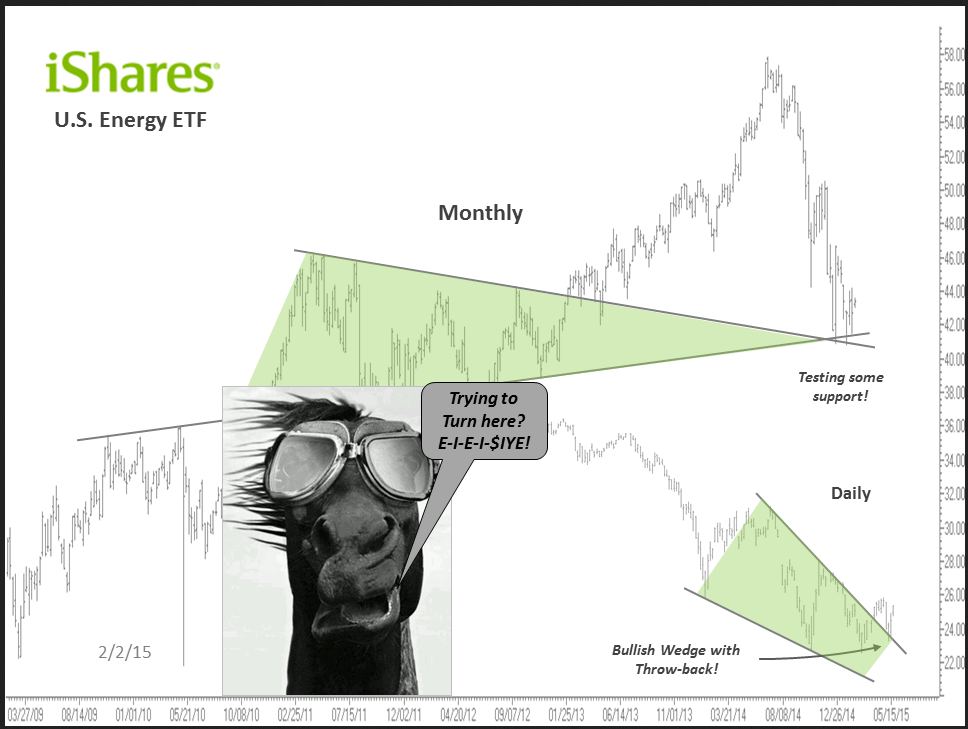
With IYE testing some long-term support on its monthly chart, the ETF could be ready for a notable near-term move.
“Longer term monthly chart is showing some confluence of support. The daily chart looks to be breaking out of a bullish wedge,” according to Captain John Charts.
Although Wednesday’s 8% plunge for oil prices serves as a reminder to investors that the energy still has plenty of issues to work through, some of the sector’s largest companies are taking steps to conserve cash. [Optimism for a Big Energy ETF]
“Lower oil prices are starting to have a dramatic impact on the behavior of energy companies. For example, Shell just announced a $15 billion cut in capital expenditures and the overall number of horizontal U.S. rigs has collapsed by over 200 in just the last two months. A slowdown in future exploration and production should lead to stabilization in oil prices,” said BlackRock Global Chief Investment Strategist Russ Koesterich in a recent note.
In addition to Royal Dutch Shell (NYSE: RDS-A), which is not one of the 93 holdings held by IYE, Exxon Mobil (NYSE: XOM, Chevron (NYSE: CVX) and ConocoPhillips (NYSE: COP) are among the oil majors that have announced $40 billion in spending reductions. Those stocks combine for almost 42% of IYE’s weight.
Exxon slashed its share repurchase plan by 50% to conserve capital while Chevron suspended 2015 buyback efforts. Fortunately, neither company has announced negative dividend actions, something the options market has speculated is on the horizon for some oil majors. [Energy ETFs Could Have Dividend Issues]
Exxon, the largest U.S. oil company and IYE’s largest holding, has a dividend increase streak of 31 years. Exxon and Chevron are members of the S&P Dividend Aristocrats Index, which requires 25 consecutive years of increased dividends for inclusion.
Despite slumping oil prices, energy ETFs, including IYE, face valuation headwinds. For example, IYE’s rival, the Energy Select Sector SPDR (NYSEArca: XLE), trades at the highest multiple of the nine sector SPDR ETFs while the energy sector is the most richly valued of the 10 sectors tracked within the S&P 500.
iShares U.S. Energy ETF