Eastern European markets and related exchange traded funds could also indirectly benefit from the European Central Bank’s quantitative easing program as the stimulus could provide some spillover effects for neighboring states.
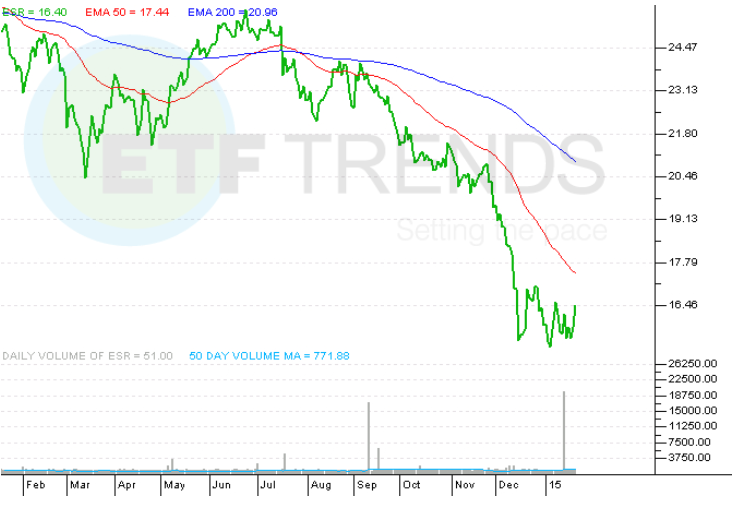
For eastern European exposure, investors can monitor the iShares MSCI Emerging Markets Eastern Europe Index Fund ETF (NYSEArca: ESR) and SPDR S&P Emerging Europe ETF (NYSEArca: GUR), which have increased 6.6% and 6.2% over the past week, respectively. [ECB Stimulus to Fuel Emerging Market ETFs]
However, potential investors should be aware that the ETFs have significant exposure to Russia. ESR has a heavier tilt toward Russia at 64.9%, followed by Poland 27.7%, the Czech Republic 3.6% and Hugary 3.3%. GUR includes a 41.1% weight toward Russia, followed by Turkey 26.4% and Poland 19.1%, Greece 6.1%, Czech Republic 2.6% and Hungary 2.6%.
These eastern European countries will indirectly benefit from ECB’s move to promote cross-border lending and foster growth in the Eurzone, their main trading partner, Bloomberg reports.
“This will cause inflationary expectations to go out of the deflationary trap and finally create growth, which is good for central and eastern Europe because it has a major trade link with the euro zone” Michael Ganske, a manager at Rogge Global Partners Plc, said in the Bloomberg article. “Poland, Hungary and the Czech Republic have highly synchronized business cycles with the euro zone.”
For instance, Russia has been a major trading partner to the Eurozone, providing a significant chunk of oil imports to the euro-bloc.
The Market Vectors Russia ETF (NYSEArca: RSX), which has been been one of the worst performing emerging market ETFs in 2014, jumped 11.3% over the past week.
Poland, though, will still have to sort through the fallout from the sudden appreciation in the franc currency, which is problematic given that the Polish economy is home to $35 billion worth of franc-denominated mortgages. Year-to-date, the iShares MSCI Poland Capped ETF (NYSEArca: EPOL) and the Market Vectors Poland ETF (NYSEArca: PLND) both declined a little over 4%. [Swissie Surge Punishes Poland ETFs]
However, eastern European countries may begin to cut down their own borrowing costs in response to ECB actions, which could also bolster growth in their respective economies, according to Simon Quijano-Evans, head of emerging-market research at Commerzbank AG.
‘‘The message seems very clear: cut rates,’’ Quijano-Evans said in the article. ‘‘Otherwise we’re going to see this appreciation pressure on the currencies. You’re going to see disinflation or deflation pass-through to these countries as these are so highly interwoven with the euro zone.”
iShares MSCI Emerging Markets Eastern Europe Index Fund ETF
For more information on the eastern European region, visit our eastern Europe category.
Max Chen contributed to this article.