Broadly speaking, 2014 has been unkind to emerging markets exchange traded funds. That much is confirmed by the average year-to-date loss of about 4.5% for the Vanguard FTSE Emerging Markets ETF (NYSEArca: VWO) and the iShares MSCI Emerging Markets ETF (NYSEArca: EEM), the two largest emerging markets ETF by assets.
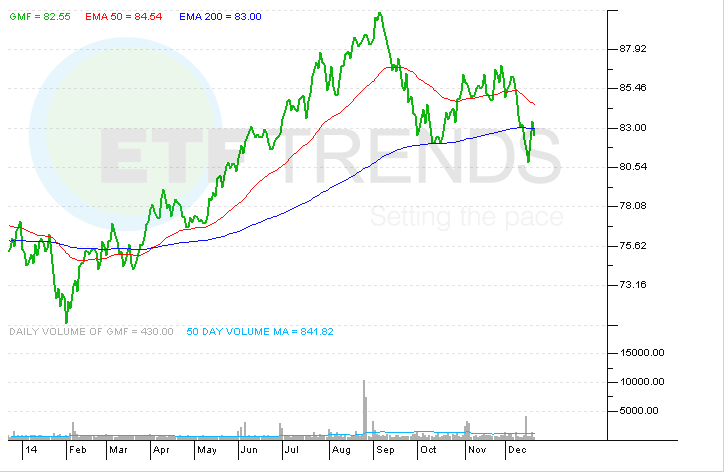
Although it has been another year of disappointments for emerging markets ETFs, there have been pockets of strength. Among single-country funds, that includes India ETFs, which have easily been the best BRIC performers. When it comes to multi-country and regional emerging markets funds, the SPDR S&P Emerging Asia Pacific ETF (NYSEArca: GMF) has stood tall.
GMF has jumped 8.3% year-to-date and with Asian markets expected to again be leaders among developing world equities in 2015, GMF is well-positioned to an emerging markets leader again next year.
In addition to a 41.2% weight to China, GMF allocates almost 40% of its combined weight to Taiwan and India, though the ETF features no exposure to South Korean stocks because Standard & Poor’s, GMF’s index provider, considers South Korea to be a developed market while some rival index providers still classify Asia’s fourth-largest economy as an emerging market. [This Asia Pacific ETF is Winning]
GMF’s large weights to China and India are predictable for ETFs that focus on emerging Asian equities, but choosy investors realize Emerging Europe and Latin America stocks have been laggards. Investors will need to remain selective with emerging markets ETFs in the new year. That includes employing a preference for Asian economies over emerging Europe and Latin America equivalents while also focusing on reform-minded economies. [Where to Look With EM ETFs in 2015]
There is also value in considering reform-minded emerging markets. That includes China and India as well as Indonesia, Thailand and the Philippines. Those countries combine for nearly 12% of GMF’s weight.
GMF offers some other advantages. Home to nearly 560, the ETF is not excessively exposed to any of those holdings as Apple (NasdaqGS: AAPL) parts supplier is GMF’s largest holding at a weight of just 3%. Additionally, while GMF does feature some exposure to state-run enterprises, the fund is not dangerously allocated to those companies.
The telecom, energy, materials and utilities sectors, groups that often sport some of the largest concentrations of state-controlled firms in emerging markets, combine for just 23% of GMF’s weight. [Avoid State-Run Companies With This ETF]
GMF also allocates nearly a quarter of its weight to the technology sector and that includes some marquee Chinese Internet names among the ETF’s top 10 holdings. Tencent (OTC: TCEHY), Baidu (NasdaqGS: BIDU) and Alibaba (NYSE: BABA) are all top 10 holdings in GMF. The ETF is able to hold Alibaba because S&P was one of the first index providers to assign the company with a China domicile, allowing for Alibaba’s inclusion in S&P indexes. [Good Indexing News for Alibaba]
SPDR S&P Emerging Asia Pacific ETF
Tom Lydon’s clients own shares of EEM. Todd Shriber owns shares of Alibaba.