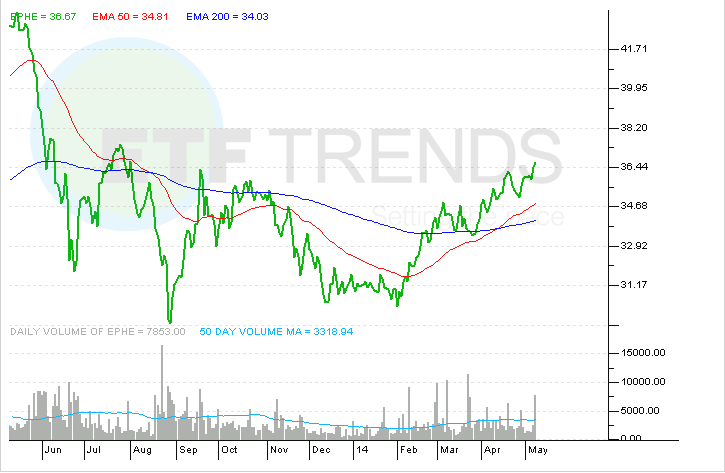
These may not be its halcyon days of 2012, but after some tapering-induced troubles last year, the iShares MSCI Philippines ETF (NYSEArca: EPHE) is back in business.
Boosted by increased government spending as a means of luring additional foreign investment and a sound debt profile, EPHE was up 17.3% over the 90 days leading up to Friday, good for the best performance among ETFs tracking Southeast Asian nations.
EPHE’s three-month return is nearly triple that of the iShares MSCI Malaysia ETF (NYSEArca: EWM), more than double that of the iShares MSCI Thailand Capped ETF (NYSEArca: THD) and ahead of the two major Indonesia ETFs. [Bullish View on Asia ETFs]
As political tensions are again weighing on THD, sending the lone Thailand ETF down more than 4% this week, EPHE is higher by 2.4% for the week. Philippine stocks are trading at their highest levels in nearly a year a day after Standard & Poor’s bestowed another sovereign credit rating upgrade on the country. [Politics Weigh on Thailand ETF]
“We raised the ratings because we now believe the ongoing reforms to address shortcomings in structural, administrative, institutional, and governance areas will endure beyond the current administration. We believe the resulting gains in government revenue generation, spending efficiency, and the improvements in public debt profile and investment environment will at least be preserved in the medium term,” Standard & Poor’s said in a statement obtained by Bloomberg.
The Philippines is now rated BBB by S&P, better than the BBB- ratings sported by Brazil, India and Russia. Moody’s Investors Service, Fitch Ratings and S&P each upgraded the Philippines to investment-grade status last year.
The $354 million WisdomTree Asia Local Debt Fund (NYSEArca: ALD) has a 6.31% weight to the Philippines, putting the country on par with New Zealand and Taiwan in the ETF. ALD is up 3.5% over the past three months.
Bolstering the case for Philippine debt and perhaps more upgrades from other ratings agencies is the country’s strong current account surplus, a debt/GDP ratio of around 40% and $79.6 billion in forex reserves.
Foreign investors have been net buyers of Manila-listed shares nearly everyday for a month. Year-to-date, investors have allocated $52.6 million to EPHE, or 14.6% of the ETF’s current assets under management total.
Investors are paying up for EPHE and Philippine equities. Stocks listed in Manila have a P/E ratio north of 20, double that of the MSCI Emerging Markets Index. With a P/E of about 24.3, EPHE is noticeably pricier than its Indonesia and Malaysia counterparts.
iShares MSCI Philippines ETF