As a result of the diminished supply outlook, natural gas related exchange traded funds could maintain their current levels, with the Energy Information Administration outlining higher-than-anticipated average natural gas prices for 2014.
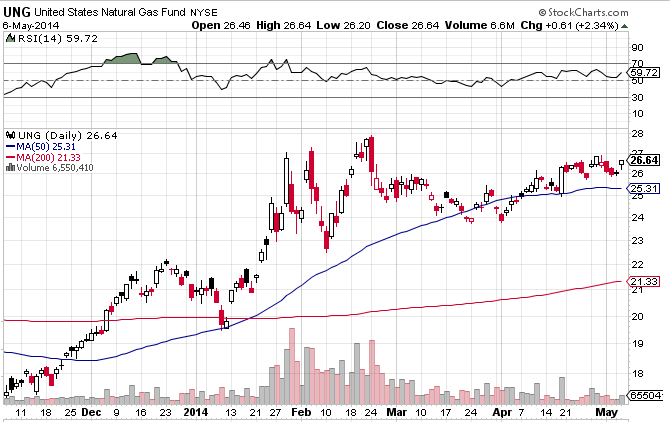
The United States Natural Gas Fund (NYSEArca: UNG) and iPath Dow Jones-UBS Natural Gas Total Return Sub-Index ETN (NYSEArca: GAZ) are among the best performing exchange traded products of 2014, surging 25.8% and 25.0% year-to-date, respectively. UNG’s February high was its strongest level since late 2011.
The EIA estimates that natural gas will average $4.74 per million British thermal units, or 6.8% higher than its last month’s forecast, due to ongoing tight supply, reports Timothy Puko for the Wall Street Journal.
NYMEX natural gas futures were trading around $4.8 Tuesday.
Gas observers believe average prices from April through June will remain 10% above projections from a month ago.
The government forecaster also expects natural gas prices to finish 2014 at an average $4.88, or up 27% from the average price of $3.84 over 2013. However, the EIA warned that gas prices could dip to $4.23 in 2015 as inventories are replenished.
The U.S. shale oil boom has encouraged power plants and industrial consumers to use cheap natural gas, but energy producers, discouraged by the low prices, have yet to switch back to drilling for natural gas. The government forecaster estimates that given current gas production levels, inventories will hit 3.4 trillion cubic feet by the end of October, the lowest level since 2005. [Low Production Outlook is Supporting Natural Gas ETFs]
As of April 25, natural gas inventories were 980 billion cubic feet, or half the average for this time of year. Consumers dug deep into gas reserves over the unexpectedly frigid winter months. [Summer Shortfall Could Bolster Natural Gas ETFs]
United States Natural Gas Fund
For more information on natural gas, visit our natural gas category.
Max Chen contributed to this article.