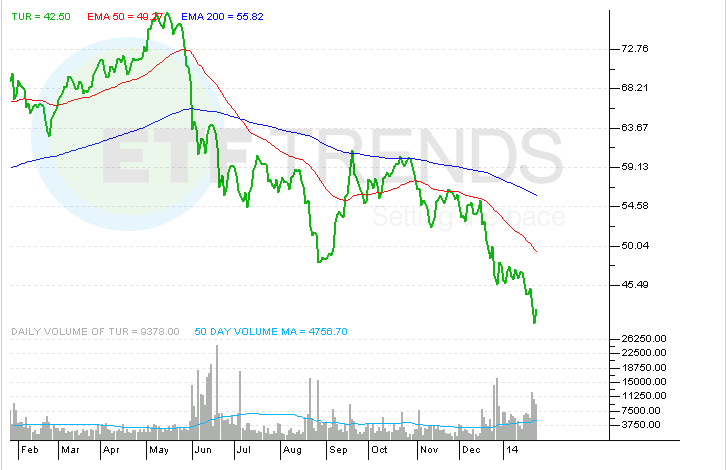
The embattled iShares MSCI Turkey ETF (NYSEArca: TUR) may have gotten a lifeline Tuesday evening when the Turkish central bank raised its overnight lending rate to 12% from 7.75% and more than doubled the overnight borrowing rate to 8% to 3.5% in one of the boldest moves by any central bank in recent memory to defend a flailing currency.
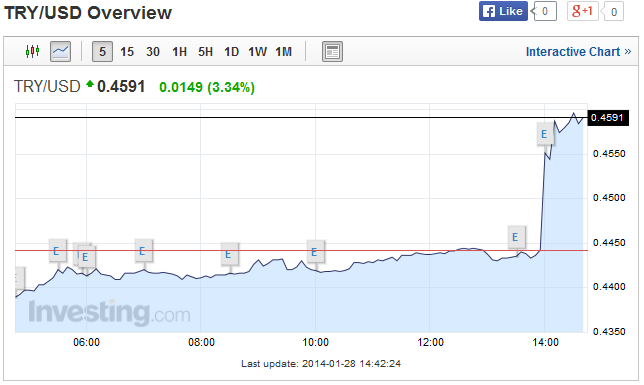
As the chart below indicates, forex traders cheered the move, sending the Turkish lira soaring against the U.S. dollar.
Although TUR rose modestly Tuesday and closed in the higher end of its intraday range, volume was light. TUR, which posted an almost 66% gain in 2012, plunged 27.3% last year amid overall distaste for emerging markets ETFs, political violence and a faltering lira in Turkey. [Turkey ETF Battered by Violence]
Viewed by some analysts as one of the emerging markets most vulnerable to the Federal Reserve’s plans to reduce its bond-buying program, Turkey has been able to obfuscate high political risk from foreign investors. TUR’s nearly 11% year-to-date loss ranks among the 10 worst performances by non-leveraged ETFs. [Big Trouble in Emerging Markets]
With Turkish citizens eager to dump lira in favor of dollars, euros and other foreign currencies, yields on the country’s 10-year sovereign bonds spiked to almost 10.5%, according to CNBC.
As those yields have soared, ETFs with significant allocations to Turkish debt have been hampered. That list includes the iShares Emerging Markets High Yield Bond ETF (NYSEArca: EMHY), which had an almost 14% weight to Turkey as of Jan. 27, and the Market Vectors Emerging Markets Local Currency Bond ETF (NYSEArca: EMLC).
EMLC had a 7.3% weight to lira-denominated debt as of the end of 2013. Turkey is also a top-five country weight in the Vanguard Emerging Markets Government Bond ETF (NasdaqGS: VWOB). [Problems for This EM Bond ETF]
iShares MSCI Turkey ETF