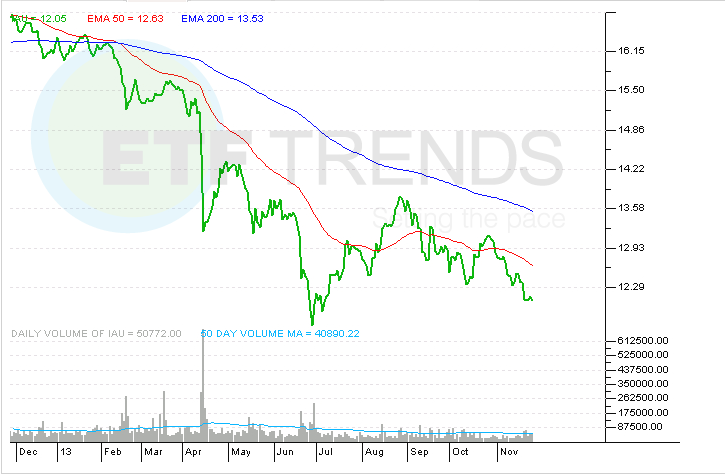
The SPDR Gold Shares (NYSEArca: GLD), the iShares Gold Trust (NYSEArca: IAU) and rival physically-backed gold exchange traded funds have careened to losses of more than 26% this, proving along the way that gold’s bull market is ending with a resounding thud.
Trading around $1,241 per troy ounce at this writing, gold futures are at risk of falling below the psychologically important $1,200 an ounce level. That level is not just mentally important. It is also the area at which mining industry observers are likely to fret even more about the ability of miners to profitably extract gold from the earth. [An Ominous View on Mining ETFs]
Earlier this week, UBS AG cut its one-month target to $1,180 and prices may “easily” fall below $1,125 by the end of December First Asset Investment Management told Nicholas Larkin of Bloomberg.
Gold’s recent price action indicates such a decline is not as far-flung as some bullion bulls would like to believe. In the past three months, GLD and IAU have slid 12%. The European sovereign debt crisis, quantitative easing by the Federal reserve and a weak U.S. dollar have failed to lift bullion this year.
Additionally, money managers are seen as having a tepid, at best, appetite for gold heading into 2014. Instead, they prefer platinum group metals on the basis of expected supply shortages and increased demand as the global economy perks up. [Enthusiasm Lacking for Commodities Heading Into 2014]
Then there is the specter of Federal Reserve tapering. With tapering seen as unlikely in December, conventional wisdom seems to be that the Fed will begin trimming its bond-buying efforts late in the first quarter of 2014.
That would be a sign that the U.S. economy is improving, potentially giving way to further upside for riskier assets, such as stocks, while leaving gold behind.
iShares Gold Trust
ETF Trends editorial team contributed to this post. Tom Lydon’s clients own shares of GLD.