Low-volatility ETFs have been popular with risk-averse investors who want to maintain exposure to U.S. equities but some of the funds’ overweighting to the utilities sector has been a drag on performance in 2013.
PowerShares S&P 500 Low Volatility Portfolio (NYSEArca: SPLV) is the largest ETF in the category.
Year to date, SPLV is up 14.9%, while the S&P 500 has gained 17.5%, according to Morningstar.
So far in 2013, SPLV has brought in $982 million, according to IndexUniverse flow data.
“Based on the academic research that has found that low-volatility strategies have provided market-like returns with less than market risk, they’ve become the darling of investors,” writes Larry Swedroe for CBS MoneyWatch.
However, he theorizes the popularity of low-volatility approaches has changed the nature of the investments. In particular, low-volatility ETFs have moved away from a value strategy, Swedroe said.
“The evidence behind low-volatility investing is truly impressive. However, low-volatility strategies can underperform during bull markets,” says Morningstar ETF analyst Samuel Lee in a report on SPLV.
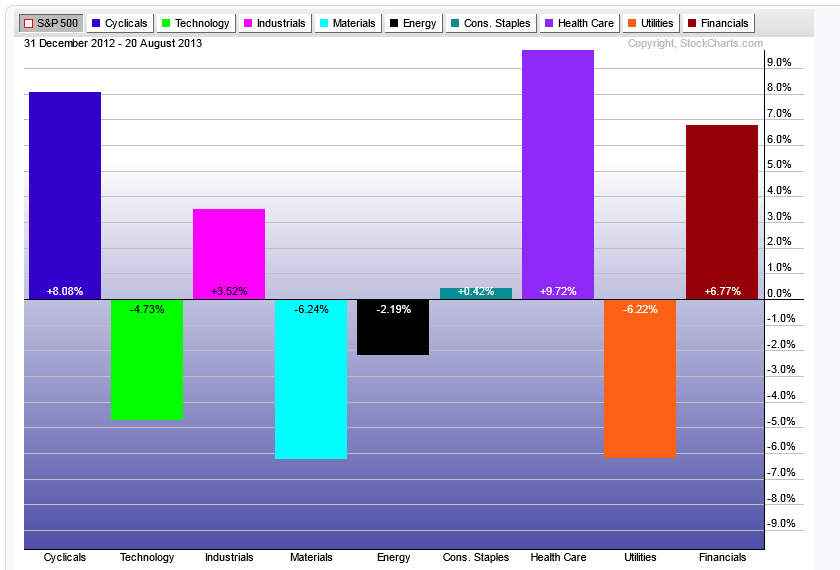
The ETF’s biggest sector weighting is in utilities at 25.7% of the portfolio. Utilities Select Sector SPDR (NYSEArca: XLU) has posted a total return of 9.6% this year. Utilities are one of the worst-performing sectors amid the move higher in interest rates.
The chart below shows the performance of sector ETFs against the S&P 500 this year.