Meat exports surged in 2011 due to growing demand from Asian countries. Beef exports increased 27%, with exports to Japan and South Korea increasing 36% and 47%, respectively. Similarly, pork exports increased 23% in 2011 with exports to South Korea up 129% from 2010. Other significant importers of meat products this year included Canada, Russia, and China.
While global meat consumption has grown substantially, domestic consumption has declined for the fourth year in a row and is expected to continue its descent in 2012. Despite lower domestic consumption, the projected outlook for beef remains bullish. Growing demand in key Asian markets such as Japan and South Korea combined with reduced cattle numbers in the U.S., primarily due to severe droughts in places such as Texas, have led to excess demand and increased prices.
Strong demand for pork should be somewhat offset in 2012 due to increased hog offspring. However, with the extension of South Korea’s tax-free pork imports through March of next year, exports to the country should remain strong. Exports to Japan, the biggest consumer of pork, will likely increase as the country recovers from the major earthquake and tsunami that ravaged the country 9 months ago. In a report from Pork Network, Becca Hendricks, who works for the National Pork Board stated, “Japanese consumers are concerned about the safety of their domestic food supply, and they appreciate the support of U.S. pork producers.”
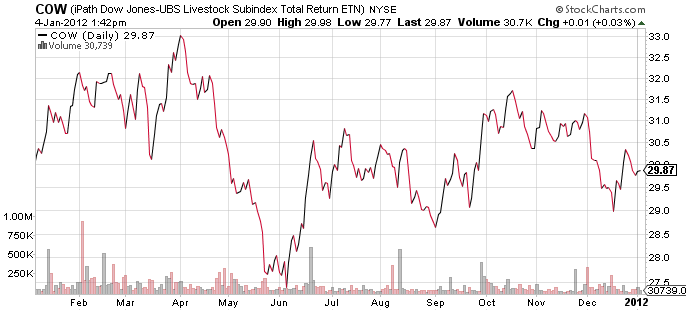
Investors looking to add exposure to the meat industry may be interested in two exchange traded products that offer direct exposure to cattle and hogs. The iPath DJ-AIG Livestock Total Return Sub-Index ETN (NYSEArca: COW), which invests entirely in livestock, allocates approximately 60% of its holdings to cattle and 40% to hogs. PowerShares DB Agriculture ETF (NYSEArca: DBA), which also invests in livestock, allocates about 15% of its holdings to cattle and 8% to hogs.
Dairy was another commodity that performed well in 2011. In a report from Drovers Cattle Network, Alan Levitt, who writes the CME Daily Dairy Report stated, “The story for dairy this year has been the strength of global demand… Even with world milk production up nearly 3 percent this year, global demand has been strong enough to absorb it.” The same report showed domestic dairy exports totaling almost $4 billion through October, up 6.3% from total domestic dairy exports in 2010. Strong demand from China, whose dairy imports were up 10% through October, as well as the Middle East and Mexico will likely keep dairy in high demand through 2012.
Increased global consumption of meat and dairy may help stabilize other commodity prices such as corn and soybeans, which are both used as livestock feed. The iPath Dow Jones AIG-Agriculture ETN (NYSEArca: JJA), whose largest sector allocations are soybeans (25%) and corn (24%), provide an indirect way for investors to capitalize on higher global meat and dairy consumption.
One of the biggest factors affecting meat and dairy exports in 2012 will be a strong dollar. Although meat and dairy exports are projected to increase, they may be hindered by the increasing strength of the dollar, making imports for other countries more expensive. For example, dairy imports to Vietnam from China increased 30% through November due to cheaper prices. Thus, it will be important to watch the value of the dollar in the coming months of the New Year and the reactions of major importers of meat, dairy and other commodities. If exports from other countries such as China or Uruguay, whose meat exports jumped 21% through November continue to increase, then domestic meat and dairy exporters may face a backlash from the stronger dollar.
iPath DJ-AIG Livestock Total Return Sub-Index ETN
August Koster contributed to this article.