Exchange traded funds that invest in Treasury bonds are caught between two powerful crosscurrents in the markets.
Although investors hear a lot about the debt ceiling and the U.S. budget deficit, Treasury yields have actually been falling recently, meaning bond prices are rising. This suggests demand for Treasuries, which are seen as a safe haven in times of market stress.
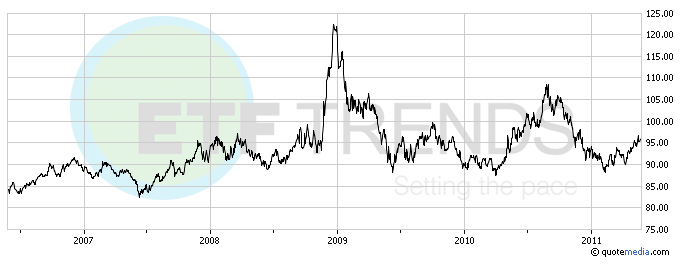
For example, iShares Barclays 20+ Year Treasury Bond Fund (NYSEArca: TLT) surged in late 2008 as the worst of the credit crisis shook markets.
There are powerful arguments against owning Treasury ETFs now, though, and many high-profile investors are bearish on government debt.
For example, Reuters recently reported that with the national debt at $14.3 trillion, this amount piled in $1 bills would reach to the moon and back. Twice.
Some commentators say it’s only a matter of time until the “bond vigilantes” turn on the U.S. government debt market and demand higher yields. Additionally, rising inflation is a killer for bond prices as purchasing power erodes.
Despite these concerns, iShares Barclays 20+ Year Treasury Bond Fund is in positive territory so far this year with a gain of more than 3%. [Treasury ETFs Still Waiting for Higher Rates]
Even the ETF’s sponsor, BlackRock unit iShares, is warning about potential trouble in Treasury bonds.
Russ Koesterich, iShares Global Chief Investment Strategist, in a blog this week wrote negotiations in Washington over the debt ceiling will likely end with something similar to the 2011 budget deal.
Therefore, fears of default are exaggerated but large deficit spending is likely to continue, bringing a continuation of the large supply of Treasury debt. However, the inflation-adjusted yield on the 10-year note is well below the 60-year average, the strategist noted.
“In other words, at a time when deficits will likely ensure record supplies of new Treasury instruments, the price of longer dated Treasury instruments is at a record high,” Koesterich wrote. “As such, we continue to believe the U.S. Treasury market offers little value and would remain underweight TLT and other long-term Treasury funds over the long-term.”
Yet there are some fundamental reasons Treasury prices could rise and push yields down further. First, bonds would be attractive in a deflationary environment if the global economy falters badly. Another wild card is the debt crisis in Europe. If it flares up, investors could seek the safety of U.S. Treasuries.
iShares Barclays 20+ Year Treasury Bond Fund