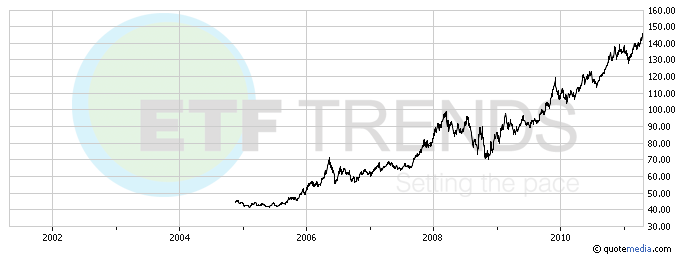
The driving forces behind gold’s huge rally over the past decade including exchange traded funds (ETFs) are unsustainable and the precious metal’s prices are going lower in the long run, investment researcher Morningstar says.
“After exhibiting few signs of life during much of the 1980s and 1990s, gold prices have revived during the last 10 years, climbing more than five-fold from the 2001 average price of less than $300 per ounce,” analyst Joung Park wrote in a report Wednesday.
Gold prices rose above $1,500 an ounce Wednesday as the U.S. dollar continued to weaken. SPDR Gold Shares (NYSEArca: GLD) rose fractionally.
The analyst identified four “major factors” that have largely fueled the surge in gold prices: ETFs, rising retail demand in emerging markets, central banks moving to net buyers of gold, and miners reducing their gold hedges.
“While we think that some of these factors could continue to provide a tailwind for gold prices, we believe many of the factors cited above are unsustainable over the long run, thereby lending support to our lower long-run gold price forecast (compared to high current prices),” Park wrote.
Gold ETFs have helped drive investment demand for the metal.
“While we recognize the manifold appeal of gold ETFs and regard these investment vehicles as more than just a temporary fad, we doubt that gold ETFs can continue to attract the tremendous amount of inflows over the long run, like they have done so far in their brief history,” Park noted. “In fact, we’ve already seen net inflows into gold ETFs in 2010 (and so far in 2011) decline from their 2009 highs.”
Morningstar in an April 6 note cut its long-term gold price forecast to $1,100 an ounce to better reflect its view on the marginal cost of mine production.
SPDR Gold Shares